

How ageing affects under-eye skin: what to expect and what works
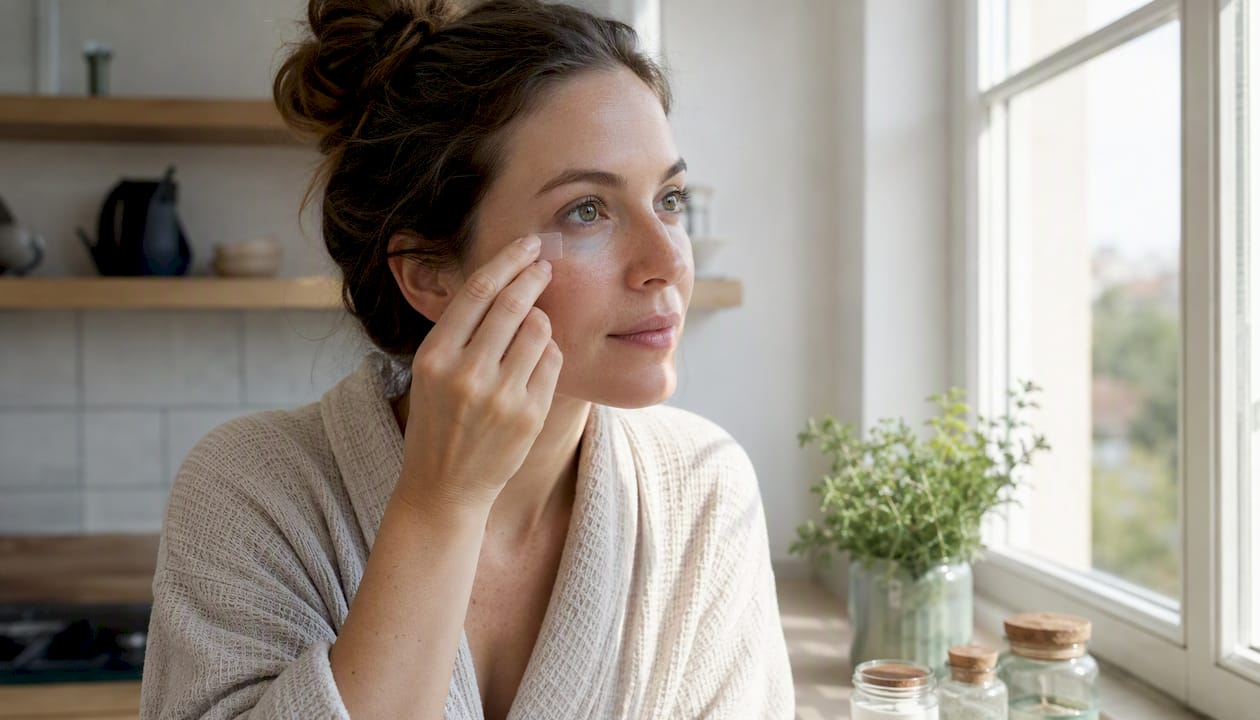
Under-eye skin ages faster than almost anywhere else on the face. It thins, loses collagen support, and lets underlying blood vessels show through, while fat pads shift and sometimes bulge forward. The result is the combination most people recognise instantly: hollows, bags, dark circles, and fine crepey lines.
Thinning skin becomes more transparent, letting blood vessels and pigment show through.
Fat pad changes cause both volume loss (hollows) and forward bulging (bags).
Vascular and pigment shifts deepen the look of dark circles.
Repetitive muscle movement from blinking carves in fine lines over decades.
Topical skincare genuinely helps hydration, texture, and the appearance of fine lines. It cannot rebuild lost volume or reposition fat pads. That distinction shapes almost every decision covered below.
Key Takeaways
Under-eye ageing stems from four interacting mechanisms: thinning skin, fat pad shifts, bone resorption, and vascular pigment changes. This means topical care and clinical procedures each solve a different piece of the problem.
Point | Details |
Skin is structurally thinner | Periorbital skin runs about 0.5mm thick versus 2mm on the cheek, leaving less collagen reserve from the start. |
Bags and hollows differ | Bags often mean fat herniation or fluid retention; hollows mean volume loss and bone resorption, requiring different fixes. |
Topicals have a ceiling | Retinoids and hydrating actives improve texture and hydration within weeks but cannot rebuild lost volume. |
Procedures address structure | Fillers, PRP, lasers, and blepharoplasty each target a different mechanism, from volume loss to excess skin. |
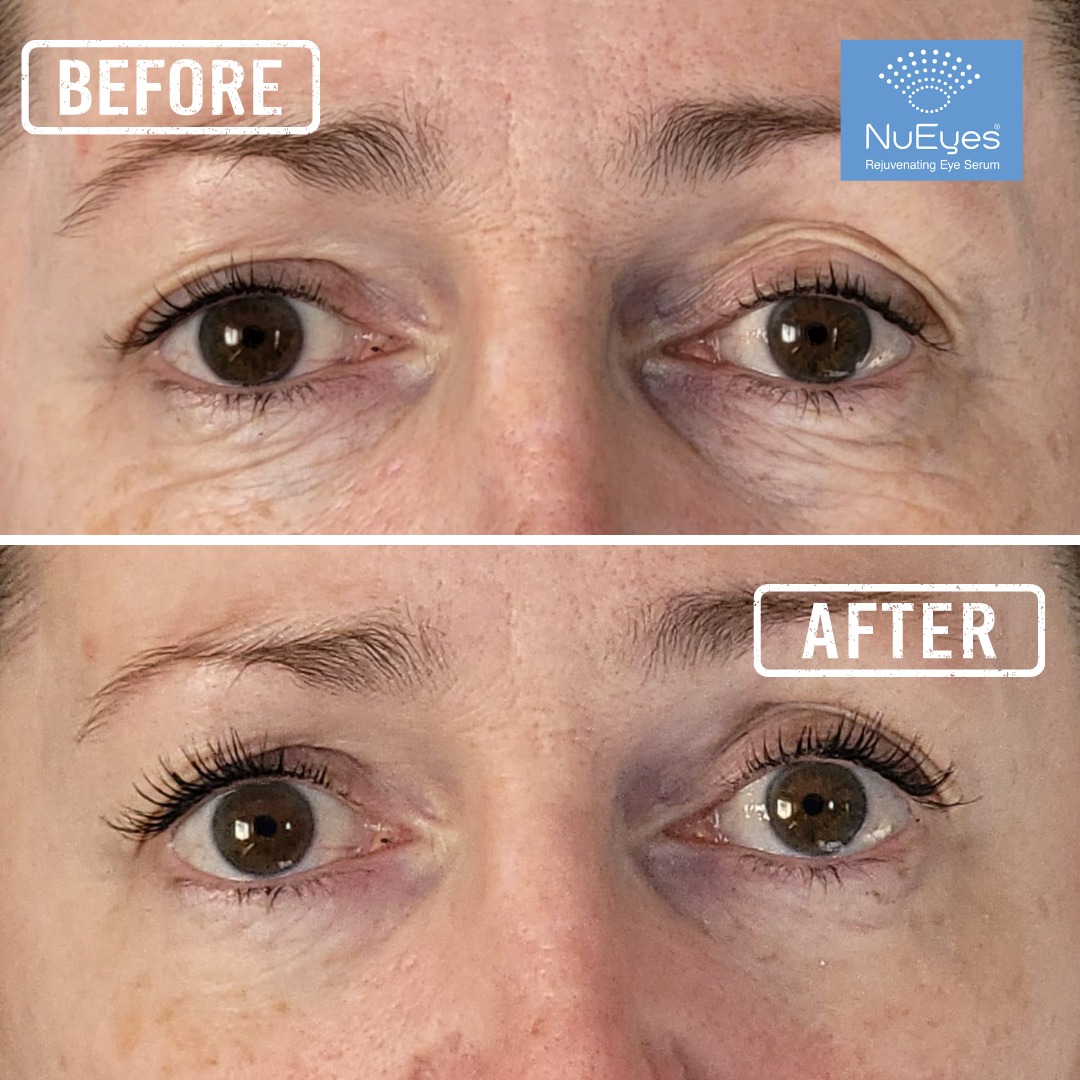
NuTan® offers a fast surface option | The NuEyes Rejuvenating Eye Serum gives rapid hydration and fine-line improvement as a complement to, not a replacement for, structural treatment. |
Table of Contents
How ageing affects under-eye skin at the tissue level
The periorbital area ages differently to the rest of your face because the anatomy is different from the start. Eyelid skin measures much thinner than on the cheek, with the former about a quarter the thickness of the latter, and it carries far fewer sebaceous glands and dermal support structures. There is less cushioning, less oil production, and fewer fibroblasts producing new collagen. That thinness is the baseline vulnerability everything else builds on.
Four mechanisms then interact to produce the visible signs you notice in the mirror:
Dermal thinning: collagen and elastin output drops with age, and periorbital skin has less reserve to begin with.
Fat and volume changes: subcutaneous and orbital fat can descend, herniate forward, or simply shrink in places, deepening the tear trough while sometimes producing bulges elsewhere.
Skeletal remodelling: the bony orbital rim gradually resorbs, removing the scaffolding that once supported the fat and skin above it.
Vascular and pigment visibility: as skin thins, the bluish tinge of underlying vessels becomes more obvious, and pigment-producing cells in the area behave unpredictably, adding to discolouration.
Mechanical wear: you blink thousands of times a day, and that repetitive muscle action etches in creases that deepen with age.
One insight often missed: these four mechanisms rarely act alone. A clinical review of periorbital ageing frames it as an interacting system, which is precisely why a single cream, however well formulated, cannot fix bags caused by fat herniation or hollows caused by bone loss. The mechanism dictates the fix.
The visible signs and what they actually mean
Not every under-eye complaint has the same cause, even when they look similar at a glance.
Fine lines and crow’s feet come mainly from collagen loss combined with years of muscle movement. A multi-ethnic study on facial ageing perception found these specific wrinkles strongly predict how old, healthy, and attractive people judge a face to be, which explains why this area gets so much attention.
Crepey, papery skin reflects long-term dermal thinning and a weakened moisture barrier.
Bags and puffiness can be fluid retention (soft, fluctuates daily) or fat herniation (firmer, persistent, structural).
Hollows and tear troughs result from volume loss, midface descent, and the bone changes described above.
Dark circles are usually a mix of vascular show-through, thinning skin, pigment, and the shadow cast by hollows, which is why ageing, genetics, and lifestyle all get blamed at once.
What speeds up under-eye ageing
Some of this is written into your genes. Chronological ageing and inherited skin thickness set your starting point, and you cannot change either. Everything else is more negotiable.
Photoageing from cumulative sun exposure breaks down collagen years before it would otherwise decline.
Smoking restricts blood flow and accelerates collagen breakdown.
Poor sleep and sleeping position contribute to fluid pooling and mechanical creasing.
High salt and alcohol intake promote fluid retention, worsening morning puffiness.
Medical factors such as allergies, thyroid disease, and certain medications can shift fluid balance around the eyes.
Pro Tip: Apply broad-spectrum SPF right up to the orbital rim every single day, not just in summer, and try to break the habit of rubbing your eyes. Neither costs you anything, and both compound enormously over twenty years.
What a proper under-eye assessment should cover
A rushed consultation tends to prescribe a cream for a structural problem, which wastes money and delays the fix that would actually work. A thorough assessment checks:
Whether puffiness is fluid-related (fluctuates, softer) or true fat herniation (persistent, firmer bulge).
Skin quality: thickness, texture, pigmentation, and how well it retains moisture.
Orbital bone volume and midface position, since descent and resorption cannot be assessed from skin alone.
Medical history, ruling out allergies, thyroid disease, or medication effects behind persistent puffiness.
Static versus dynamic wrinkles, skin laxity, tear-trough depth, and any left-right asymmetry.
Treatments that actually address under-eye ageing
Matching the treatment to the mechanism is the single most useful thing you can take from this article. Here is how the main categories stack up.
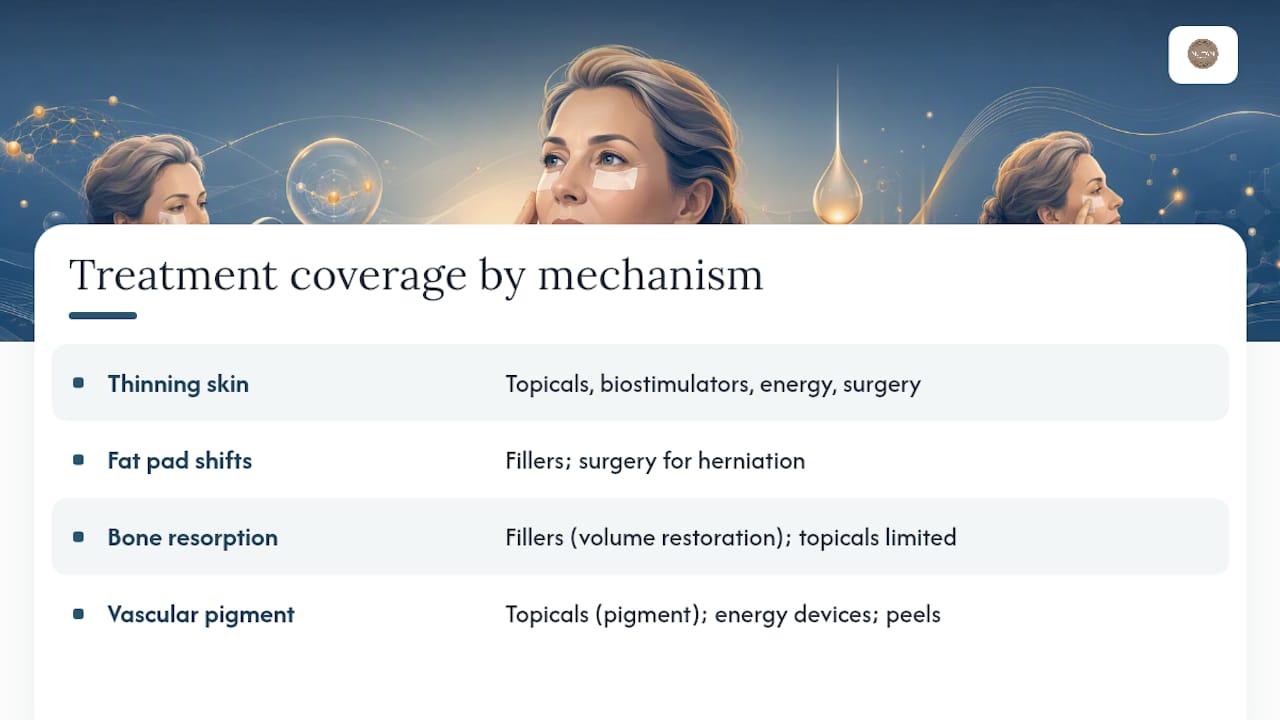
Topical actives work well on texture, hydration, and pigmentation, but have a ceiling once structural volume is lost. Retinoids remain the closest thing to a gold standard for stimulating collagen turnover, though the thin periorbital skin often reacts badly to standard strengths, which is why eye-specific formulations or gentler alternatives like bakuchiol tend to work better here. Peptides, hyaluronic acid, and antioxidants support hydration and mild collagen signalling without the irritation risk.
[
Minimally invasive procedures step in where topicals cannot reach. Hyaluronic acid fillers restore volume directly into tear-trough hollows, while PRP and polynucleotide treatments aim to biostimulate the dermis over several sessions rather than one visit. Microneedling and light chemical peels improve surface texture with modest downtime.
[
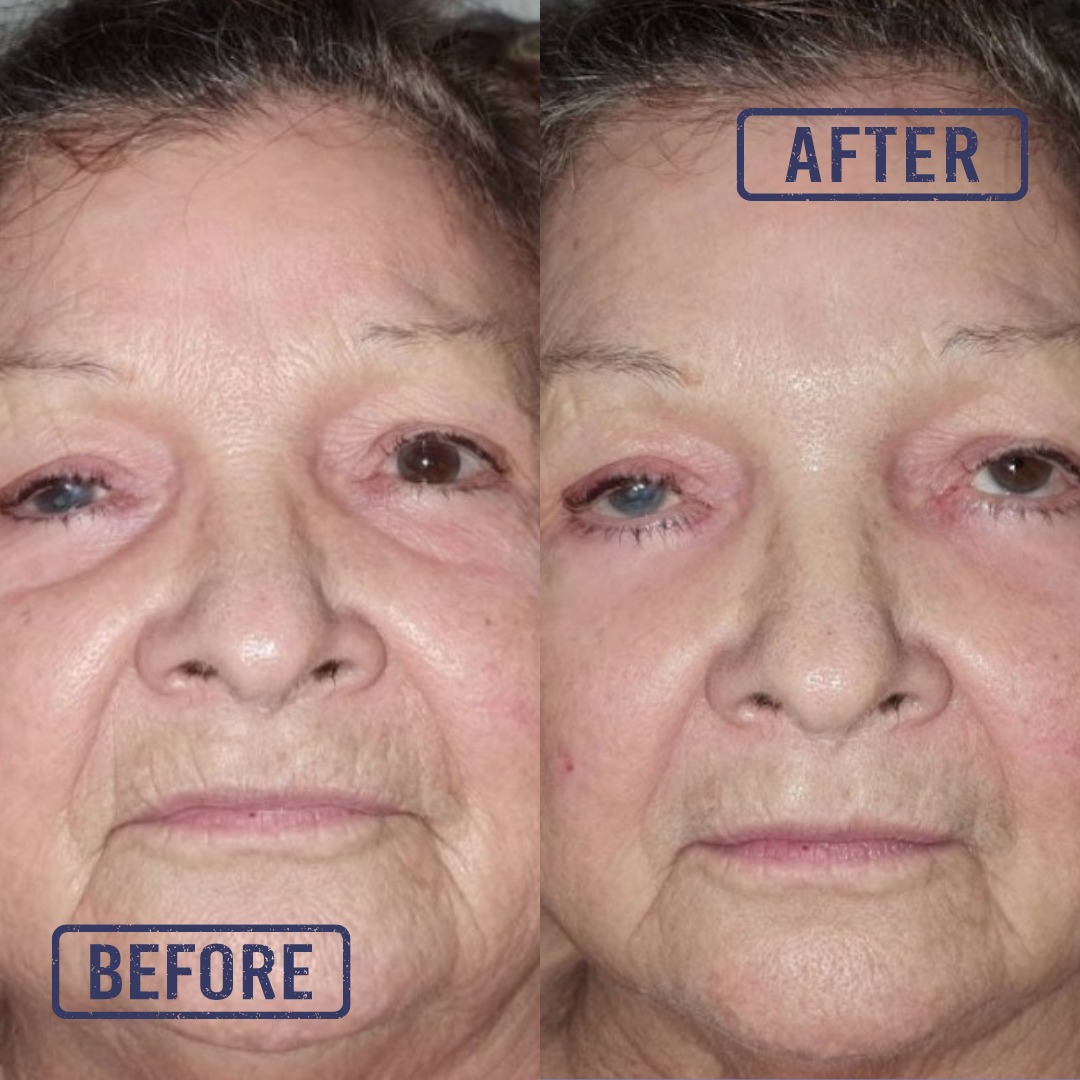
Energy-based devices, including lasers and radiofrequency, remodel collagen and target pigment, but usually need a course of sessions rather than a single treatment to show real change.
Surgery is the only durable answer to true fat herniation or excess skin. Blepharoplasty and fat repositioning correct the structural problem directly, at the cost of a genuine surgical recovery period. For skin laxity specifically, it is worth reading more on why skin loses elasticity with age to understand why creams alone rarely reverse it, and clinics offering fillers and neuromodulators can talk through which procedural route suits your anatomy.
What the research actually shows about eye creams
The evidence for topical actives is more encouraging than sceptics assume, within limits. Retinoids remain the best-studied ingredient for stimulating collagen, but their tendency to irritate periorbital skin means gentler eye-specific formulations usually outperform standard-strength versions here.
Hydration and reduced water loss can show up within minutes of application.
Instrumentally measured wrinkle depth often improves within days to weeks.
Clinically perceivable improvement in wrinkles and dark circles typically takes longer to become obvious.
A 56 day clinical trial of a formulated eye cream recorded hydration improvement within 15 to 30 minutes of application, measurable wrinkle reduction on instrumentation within the first weeks, and clinically perceptible improvement in wrinkles and dark circles by the 28 to 56 day mark. That is a genuinely useful benchmark for what a well-formulated topical can realistically deliver, and it is also the ceiling: none of it touches lost volume or herniated fat.
How to use eye actives without irritating the area
Getting the routine right matters more here than almost anywhere else on the face, because the margin for irritation is so much smaller.
Morning and evening basics:
Cleanse gently, without dragging the skin.
Apply SPF across the entire orbital rim, every morning, regardless of weather.
Pat in a hydrating serum with your ring finger rather than rubbing.
Layer thinner products before heavier creams.
Introduce retinoids gradually, two or three nights a week to start, watching for redness or flaking.
Reducing dietary salt, cutting back on alcohol, treating allergies promptly, and prioritising consistent sleep all reduce transient puffiness without any product involved at all.
Realistic timelines for improvement
Hydration and temporary plumping show within days. Specialised eye creams show measurable change over four to twelve weeks. Consistent retinoid use or biostimulating injections need months for collagen effects to build. Fillers give near-instant visible correction, settling fully over a few weeks; blepharoplasty gives durable structural results but requires proper surgical recovery time.
When to see a clinician about under-eye changes
See a doctor promptly for sudden one-sided swelling, visible asymmetry, or any sign of infection. Persistent hollows, true fat herniation, or lid laxity affecting vision warrant a dermatology or oculoplastic referral. If you suspect thyroid disease or a medication side effect, start with your GP.
Prioritise the basics before you escalate
The biggest mistake we see is skipping straight to expensive procedures before nailing the fundamentals. Sun protection and a consistent, gentle routine handle far more of the visible ageing than most people expect, and they cost almost nothing by comparison. If hollows or true fat bulges persist once you have done that for a few months, that is the point to book a proper assessment and discuss structural options honestly. Combining a good topical routine with the right procedure, rather than choosing one or the other, tends to give the most convincing result.
A faster route to brighter eyes while you build your routine
Sun protection and patience handle the long game, but most people also want to look less tired this week, not just in eight weeks. That is the gap NuTan®'s eye-focused products are built for: a rapid, visible lift for hydration and fine-line appearance while your longer-term skincare and lifestyle changes do their slower work underneath.

The NuEyes Rejuvenating Eye Serum targets fine lines and puffiness with fast-acting hydration, and the brand’s instant eye lift application guide walks you through getting a smooth, even result in a couple of minutes. Worth being clear on scope: this is a surface-level improvement, not a substitute for filler or blepharoplasty if what you are dealing with is true fat herniation or bone-related hollowing. Patch test first, particularly if your periorbital skin has ever reacted to actives before. If you also want SPF and lift across the wider face, the NuRejuv Collagen Instant Lift Face Cream with SPF 20 pairs naturally with an eye-specific routine. Start with the eye serum today and judge the result for yourself within minutes, not weeks.
Sources
For deeper clinical detail behind the claims above, these sources are worth your time.
FAQ
How do you fix ageing under the eyes?
Match the treatment to the cause: topical retinoids and hydrators improve texture and fine lines, while fillers, lasers, or blepharoplasty address volume loss, hollows, and true bags that skincare alone cannot reach.
Is it possible to tighten skin under the eyes?
Skin quality improves with consistent retinoid use, peptides, and energy-based devices like lasers, but genuine tightening of loose or lax skin usually needs a procedural or surgical approach rather than topicals alone.
How do you get rid of under-eye bags caused by ageing?
If bags are fat herniation, fillers, lasers, or blepharoplasty are typically required; if they are fluid-related puffiness, reducing salt, improving sleep, and gentle cold compresses often help.
What are common signs of ageing under the eyes?
Fine lines, crow’s feet, crepey texture, hollows or tear troughs, dark circles, and bags are the most common signs, each tracing back to a different combination of thinning skin, fat changes, and pigment or vascular visibility.
Recommended
Comments