

Skin tones tanning guide: get the right glow safely
How to match your tanning approach to your skin tone
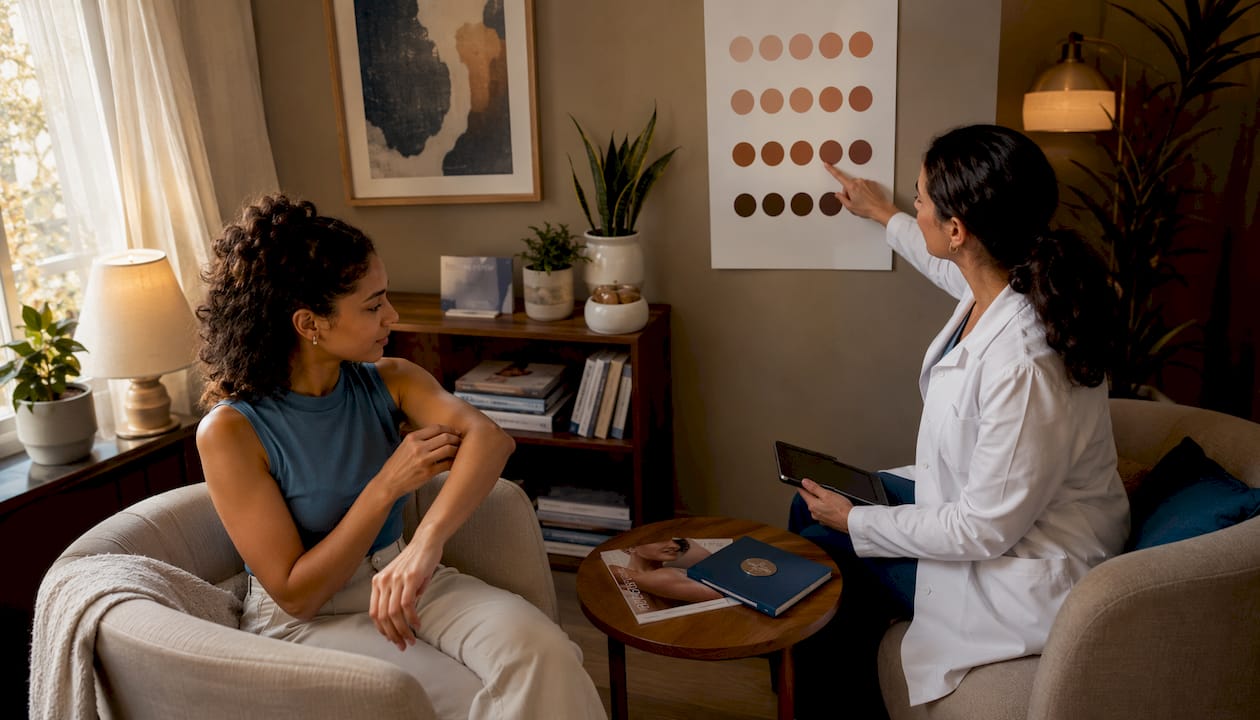
The single most important principle in any skin tones tanning guide is this: your skin tone determines everything, from how long you should spend in the sun to which tanning method will actually work for you. Get the match right and you build a natural, even glow. Get it wrong and you risk burning, hyperpigmentation, or a colour that simply does not suit you.
The Fitzpatrick Scale is the gold standard for classifying skin tones in a tanning context. Developed by dermatologist Thomas Fitzpatrick, it divides skin into six types based on melanin levels and UV response, from Type I (very fair, always burns) through to Type VI (deep brown, rarely burns). Understanding where you sit on that scale is the foundation of every safe and effective tanning decision.
NuTan® tanning patches offer a genuinely different approach, one that works across all six Fitzpatrick types. By stimulating your skin’s own melanin production, they allow you to achieve a natural tan with over 70% less UV exposure than conventional methods.
Key principles for skin tone-matched tanning:
Identify your Fitzpatrick type before choosing any tanning method or product
Match product undertones (cool, warm, neutral) to your skin’s undertones for a natural finish
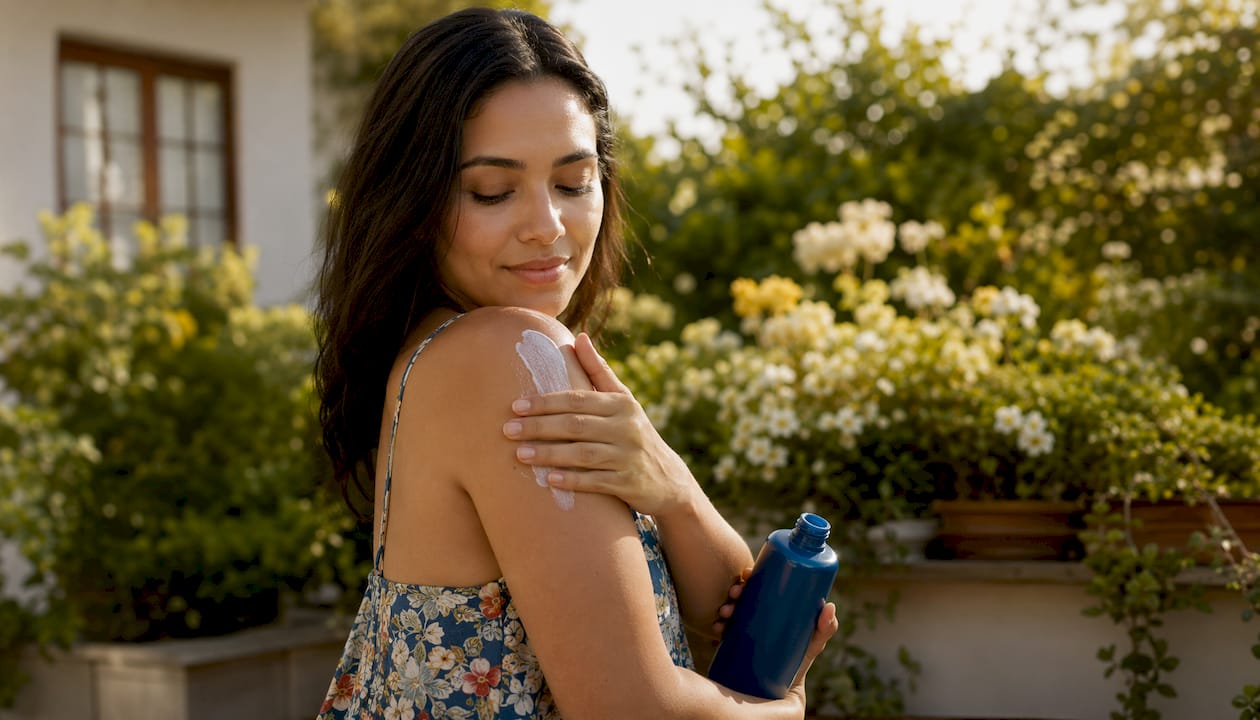
Always use broad-spectrum SPF 30 minimum, regardless of how deep your natural complexion is
Build colour gradually, aiming for 1–2 shades deeper than your natural tone
Adjust session length and frequency based on your skin type, not how tanned you look in the moment
Fitzpatrick type | Skin tone | Tanning response | Recommended method | SPF |
I | Very fair, freckles | Always burns, rarely tans | NuTan® patches, gradual builders | 50+ |
II | Fair | Burns easily, tans minimally | NuTan® patches, short UV sessions | 50 |
III | Medium beige | Sometimes burns, tans gradually | Moderate UV sessions, NuTan® patches | 30–50 |
IV | Olive | Rarely burns, tans well | UV sessions, tanning oils with SPF | 30 |
V | Brown | Very rarely burns, tans deeply | Moderate UV, NuTan® patches | 30 |
VI | Deep brown | Never burns, tans easily | Consistent UV, rich moisturising routine | 30 |
How to identify your skin tone and undertones accurately
Skin tone and undertones are two different things, and confusing them is one of the most common reasons people end up with a tan that looks off. Skin tone refers to the surface depth of your complexion: fair, light, medium, olive, tan, or deep. Undertone is the subtle hue beneath the surface, and it stays constant whether you are tanned or not.
The simplest way to find your undertone is the vein test. Look at the inside of your wrist in natural daylight. Blue or purple veins point to cool undertones. Green veins suggest warm undertones. A mix of both indicates neutral undertones. Jewellery is another useful clue: gold flatters warm undertones, silver suits cool ones, and both work equally well on neutral skin.
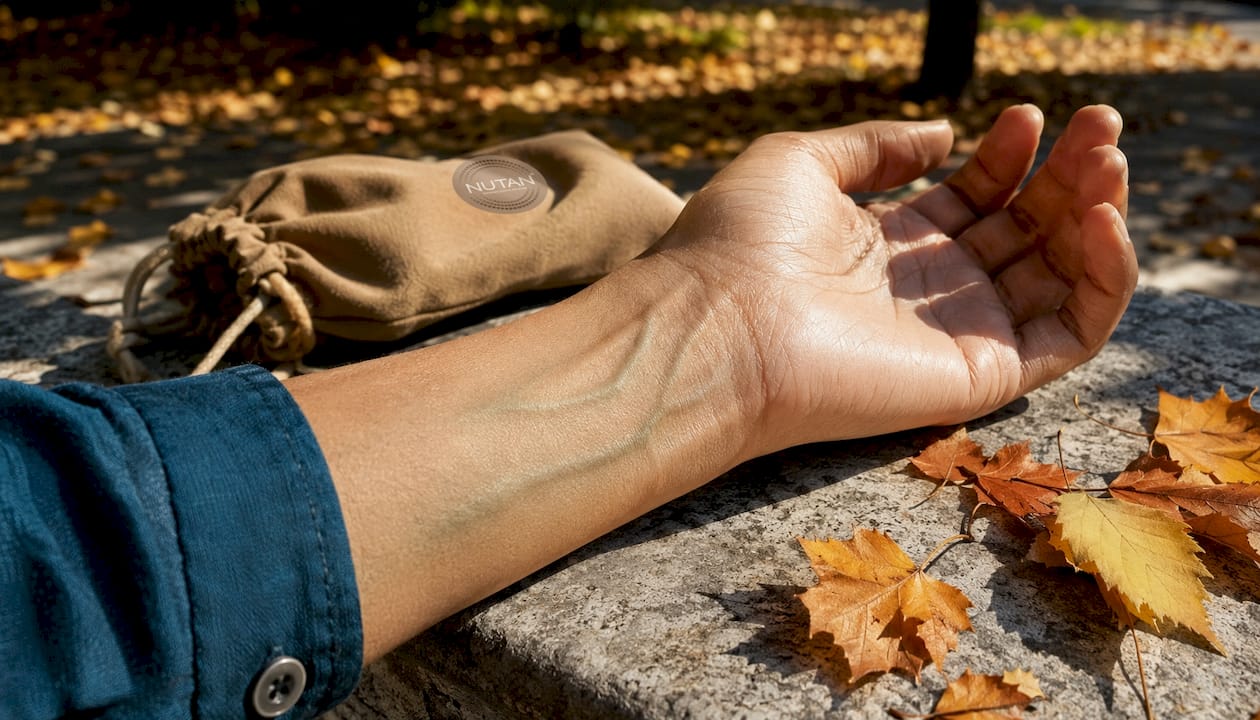
Undertones matter enormously when choosing tanning products. Cool undertones suit violet or blue-based formulas that cancel orange and yellow. Warm undertones look best with olive or caramel shades. Neutral undertones have the most flexibility, working well with balanced bronze tones.
Steps to find your skin tone and undertones:
Check your wrist veins in natural light (blue/purple = cool, green = warm, mixed = neutral)
Notice how your skin reacts to sun: easy tanning suggests warm undertones, burning before tanning suggests cool
Hold gold and silver jewellery against your skin and observe which looks more natural
Compare your inner arm (less sun-exposed) to your face to assess your true baseline tone
Implications for tanning choices:
Cool undertones: choose violet or ash-toned products; avoid golden-bronze formulas
Warm undertones: go for golden, olive, or caramel shades; avoid grey or green-based products
Neutral undertones: balanced, true-bronze shades work well; avoid extremes in either direction
Fitzpatrick scale categories and what they mean for your tan
The Fitzpatrick Scale gives every skin tone a clear tanning profile, which makes it far easier to plan sessions safely.
Type I and II skin burns quickly and tans very slowly or not at all. People with these types have the lowest natural melanin levels, and their burn threshold is reached before significant pigment develops. Short sessions of 10–15 minutes in moderate UV (index 3–4), with SPF 50, are the safest approach. Visible colour may take 7–10 days of consistent sessions to appear.
Type III and IV skin represents the most cooperative tanning profile. These tones sometimes burn initially but tan reliably, with visible colour developing after 20–30 minutes of moderate UV exposure. SPF 30 is the minimum, and sessions can extend to 40–60 minutes once a base is established.
Type V and VI skin has a natural SPF of around 13, compared to roughly 3 for very fair skin, which provides a meaningful head start. However, brown and deep skin still needs UV protection and is more prone to hyperpigmentation when overexposed. Sessions of 20–30 minutes in moderate UV are generally sufficient for Types V, while Type VI can comfortably manage 60–90 minutes with SPF 30 applied.
Fitzpatrick type | Burn risk | Tanning speed | Hyperpigmentation risk | Suggested session length |
I | Very high | Very slow | Low | 10–15 min |
II | High | Slow | Low–moderate | 10–20 min |
III | Moderate | Moderate | Moderate | 20–40 min |
IV | Low | Fast | Moderate | 40–60 min |
V | Very low | Fast | High | 20–30 min |
VI | Minimal | Very fast | High | 60–90 min |
A key point that catches many people out: your real tan shows up 24–72 hours after UV exposure, not in the moment. Judging your session by how tanned you look while still outside leads to overexposure every time.
Choosing the right tanning methods and products by skin tone
Matching your tanning method to your skin tone is where good intentions either pay off or go wrong. For Types I and II, gradual builders and NuTan® patches are the most sensible choices. The patches stimulate natural melanin production without requiring extended UV exposure, making them particularly well-suited to fair skin that burns before it tans.
Types III and IV have the most flexibility. Moderate UV sessions work well, and matching product undertones to your skin’s undertones is what separates a convincing result from an orange one. Warm undertones suit olive or caramel formulas; cool undertones benefit from violet or blue-based products that cancel yellow tones.
For Types V and VI, the goal is enhancement rather than dramatic darkening. Traditional accelerators that add a bronzed tint can look ashy or muddy on deeper complexions. Gradual, natural stimulation through NuTan® patches or moderate UV sessions produces far better results. After tanning, rich butters such as shea or cocoa butter maintain luminosity and prevent the ashiness that can dull a deep tan.
Preparation matters for every skin tone. Exfoliate 24–48 hours before tanning and ensure skin is clean and free of oils or perfumes. Hydrated skin holds a tan longer, but heavy oils can disrupt absorption, so choose a lightweight moisturiser before any session.
Best practices for product selection by undertone and skin tone:
Cool undertones: violet or blue-based formulas; avoid golden-bronze shades
Warm undertones: golden, olive, or caramel products; avoid grey or green-based formulas
Neutral undertones: balanced bronze shades work across the board
Fair skin: start with the lightest available shade and build gradually
Deeper skin: choose products specifically formulated for deeper tones to avoid ashy results
Pro Tip: Aim for 1–2 shades deeper than your natural skin tone. Going too dark too fast is the most common mistake, and the result rarely looks natural. Build colour across multiple sessions rather than trying to rush it in one go.
Sun safety and UV protection for every skin tone
Broad-spectrum SPF 30 minimum is non-negotiable for every skin tone, applied 20 minutes before UV exposure and reapplied every two hours. This applies whether you are a Type I who burns in minutes or a Type VI with high natural melanin. The protection gap between the two is real, but it is not a licence to skip sunscreen.
Hyperpigmentation is a particular concern for Types IV through VI. Overexposure triggers melanocytes to overproduce pigment in localised areas, creating dark patches that are far harder to address than a missed tan session. SPF applied consistently, especially on the face, is the most effective preventive measure.
UV damage accumulates over time regardless of skin tone. UVA rays penetrate deeply and contribute to long-term skin ageing; UVB rays cause burning and drive melanin production. A broad-spectrum formula addresses both. For deeper skin tones concerned about white cast, tinted sunscreens formulated for darker complexions are widely available in the UK.
Sun safety essentials during tanning sessions:
Apply SPF 30 minimum 20 minutes before going outside
Reapply every two hours, and immediately after swimming or towelling off
Avoid peak UV hours (11am–2pm) if you are a Type I or II
Rotate positions every 15–20 minutes for even coverage
Never judge your session length by how tanned you look in the moment
NuTan® patches: a safer tanning option for all skin tones
NuTan® patches work differently from any UV-dependent tanning method. Each patch contains the brand’s proprietary MSH-ComplexB, a Beta-melanocyte-stimulating hormone formulation derived from a natural source. It works in the same way as alpha-melanocyte-stimulating hormone (a-MSH), binding to and activating the Melanocortin 1 Receptor (MC1R) on the surface of melanocytes. This triggers a natural biochemical process that increases melanin production and provides cellular protection.
The practical result is a natural tan achieved with over 70% less UV exposure than conventional tanning methods. The tan is genuine, produced by your own skin, and does not rub or wash off. For fair-skinned people who have always struggled to tan without burning, this is a meaningful shift. For deeper skin tones, it offers a way to enhance colour with far less cumulative UV exposure.
You can read more about the science of melanin stimulation behind the patch technology, or explore non-invasive tanning methods that work across different skin tones.
Advantages of NuTan® patches across skin tones:
Natural tan produced by your own melanocytes, not a skin stain
Over 70% reduction in UV exposure needed compared to conventional methods
Suitable for all six Fitzpatrick types with appropriate guidance
Long-lasting colour that does not fade with washing
Worldwide delivery available
No needles, no injections, no harsh chemicals
Common tanning mistakes by skin tone
Fair skin types most often make the mistake of skipping SPF in the hope of speeding up results. Burns erase progress entirely because peeling skin sheds the melanin you have just built. Short, consistent sessions with SPF 50 produce far better results than one long, unprotected session.
Medium and olive skin tones tend to overestimate their resilience. Because burning is less common, it is easy to extend sessions beyond what the skin actually needs, which increases hyperpigmentation risk over time. Staying within moderate UV conditions and reapplying SPF every two hours keeps results even and healthy.
Deeper skin tones face a specific pitfall with product choice. Many commercial tanning accelerators are formulated with fair skin in mind, and their bronzed tints can look ashy or oddly coloured on brown or deep complexions. Choosing products specifically designed for deeper tones, or skipping accelerators entirely, consistently produces better outcomes. Another common error across all skin types is stopping retinol or strong actives less than 48 hours before tanning, which increases sensitivity and causes patchiness.
After-tanning skin care routines for different skin tones
Post-tanning care is where many people lose the results they have worked to build. For fair skin, an aloe-based moisturiser applied immediately after a session soothes any mild sensitivity and supports even colour development. Lightweight, fragrance-free formulas work best here.
Medium and olive skin tones benefit from a rich moisturiser within 30 minutes of coming inside. A tan-extending lotion used between sessions helps maintain depth without requiring additional UV exposure. Gentle cleansers preserve colour far better than harsh body washes, which strip the outer skin layer and accelerate fading.
For deeper skin tones, shea butter or cocoa butter applied after every session is the most effective way to maintain the natural luminosity of a deep tan and prevent ashiness. Consistent daily moisturising is what separates a tan that glows for weeks from one that fades unevenly within days. A combined tanning and skincare routine makes this easier to sustain.
Adjusting tanning duration and frequency based on skin tone
Session length and frequency should be treated as variables, not fixed rules. Types I and II benefit from sessions of 10–20 minutes every other day during the building phase, with full rest days allowing melanin to develop and distribute. Three sessions per week is a sensible ceiling for these types.
Types III and IV can manage sessions of 40–60 minutes and up to four per week during the building phase, consistent with their Fitzpatrick profile. Back-to-back days are manageable, but more than two consecutive days without a rest day increases the risk of uneven results.
Types V and VI need consistency more than frequency. For Type V, sessions of 20–30 minutes are usually effective, while Type VI can comfortably manage 60–90 minute sessions; carry out several per week for maintenance. The UV index of 3 or above is the minimum needed for meaningful tanning across all skin types. Below that threshold, sessions produce little result regardless of duration.
Tanning alternatives for sensitive or very fair skin tones
For Fitzpatrick Types I and II, or anyone with reactive skin, reducing UV exposure is not just advisable, it is necessary. NuTan® patches are the most effective option here, enabling natural melanin stimulation with dramatically less UV than any conventional approach. The NuTan® patch range includes options suited to different intensity preferences.
Gradual tanning products applied topically can add a subtle warmth without UV exposure, though it is worth noting these work by colouring the surface of the skin rather than stimulating your own melanin. For fair skin, the lightest available shade is always the right starting point. Building colour across multiple applications prevents the unnatural contrast that comes from going too dark too fast.
Choosing products that complement your skin’s undertone is as relevant for tanning alternatives as it is for UV-based methods. Cool undertones suit ash or violet-based formulas; warm undertones look most natural with golden or caramel shades. Getting this match right is what makes the difference between a convincing glow and an obviously artificial result.
How UK climate and seasons affect tanning results by skin tone
The UK’s UV index rarely exceeds 7 even in peak summer, and a UV index of 3 or above is the minimum needed for meaningful tanning. For most of the country, that threshold is only reliably met between May and September, and even then only during midday hours. This has a direct impact on what is achievable for different skin tones.
Fair skin types face the steepest challenge in the UK climate. The limited window of effective UV means building a base tan requires careful planning and consistency from the first warm days of spring. Starting with very short sessions in early spring, when UV is around 3–4 and skin has had no sun exposure for months, is the safest approach. Pushing too hard in april or early may on unsensitised fair skin leads to burns that set progress back significantly.
Deeper skin tones are better placed to make use of the UK’s moderate UV conditions, since their natural melanin provides a wider safe window. However, the shorter tanning season means maintenance between october and april typically requires an alternative approach. NuTan® patches are particularly well-suited to the UK climate for this reason: they work year-round, require minimal UV, and are unaffected by overcast skies or low UV indices. Worldwide delivery means they are accessible wherever you are.
NuTan® patches: try them for your skin tone
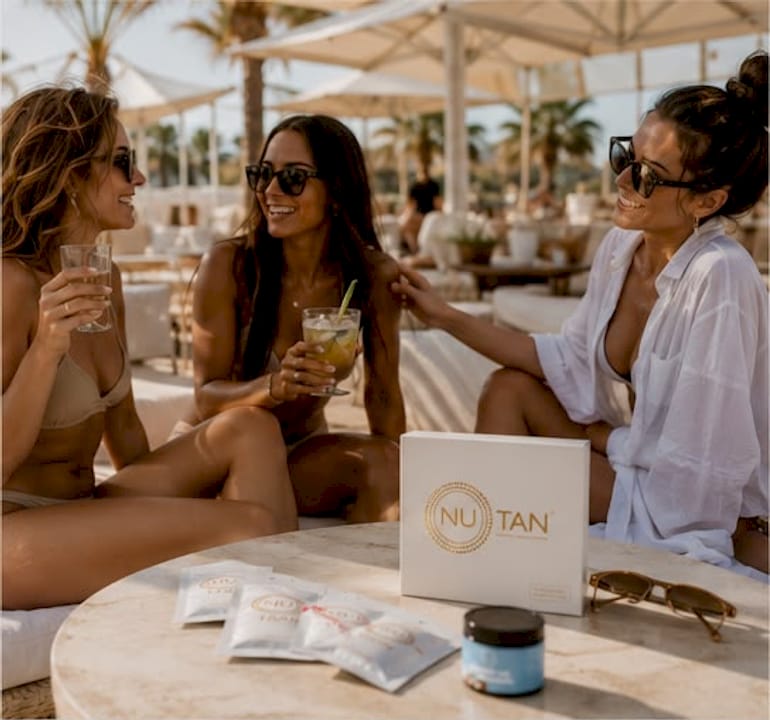
Whether you are fair-skinned and have always struggled to tan without burning, or you have a deeper complexion and want to enhance your natural colour with less UV exposure, NuTan® patches are designed to work with your skin’s own biology. The NuTan® tanning patches are available in a original strength box of 12 patches, with a 2-box kit for extended use and a Triple Strength option of 10 patches for those seeking a fasterr result. Worldwide delivery is available. Stay radiant, stay safe.
Key takeaways
The most effective approach to skin tone-specific tanning is to match your method, product undertone, and session length to your Fitzpatrick type, then protect every session with broad-spectrum SPF 30 minimum.
Point | Details |
Fitzpatrick type guides everything | Your skin type determines safe session length, SPF level, and realistic tanning outcomes. |
Undertones determine product choice | Match cool undertones to violet-based formulas and warm undertones to golden or caramel shades. |
SPF 30 minimum for all skin tones | Broad-spectrum sunscreen applied 20 minutes before exposure protects every complexion. |
NuTan® patches reduce UV by over 70% | Patches stimulate natural melanin production, making them suitable for all Fitzpatrick types year-round. |
Build colour gradually | Aiming 1–2 shades deeper than your natural tone produces the most natural and lasting results. |
FAQ
How do you know your skin tone for tanning?
The Fitzpatrick Scale is the most reliable method: assess how your skin reacts to sun exposure (burns easily vs. tans readily) and compare your complexion to the six type descriptions. Your undertone is best identified using the wrist vein test in natural daylight.
Which skin tone gets a tan most easily?
Fitzpatrick Types IV and V tan most readily. Type IV (olive skin) rarely burns and develops colour quickly, often within a week of consistent moderate UV sessions. Type V (brown skin) tans deeply and fast, with melanocytes that are already highly active.
What are the main skin tone categories on the Fitzpatrick Scale?
The scale runs from Type I (very fair, always burns, never tans) through to Type VI (deep brown, never burns, tans very easily). Types III and IV represent medium and olive tones, while Types V and VI cover brown and deep complexions.
What colour tanning product suits a cool skin undertone?
Cool undertones suit violet or blue-based formulas, which cancel out orange and yellow tones in the skin. Avoid golden-bronze products, as these tend to clash with cool undertones and produce an unnatural result.
Can NuTan® patches work for fair skin that burns easily?
Yes. NuTan® patches stimulate your skin’s own melanin production via the MC1R receptor, enabling a natural tan with over 70% less UV exposure than conventional methods. This makes them particularly well-suited to Fitzpatrick Types I and II, who struggle to tan without burning.
Recommended
Comments