

Periorbital oedema explained: causes, symptoms and treatment
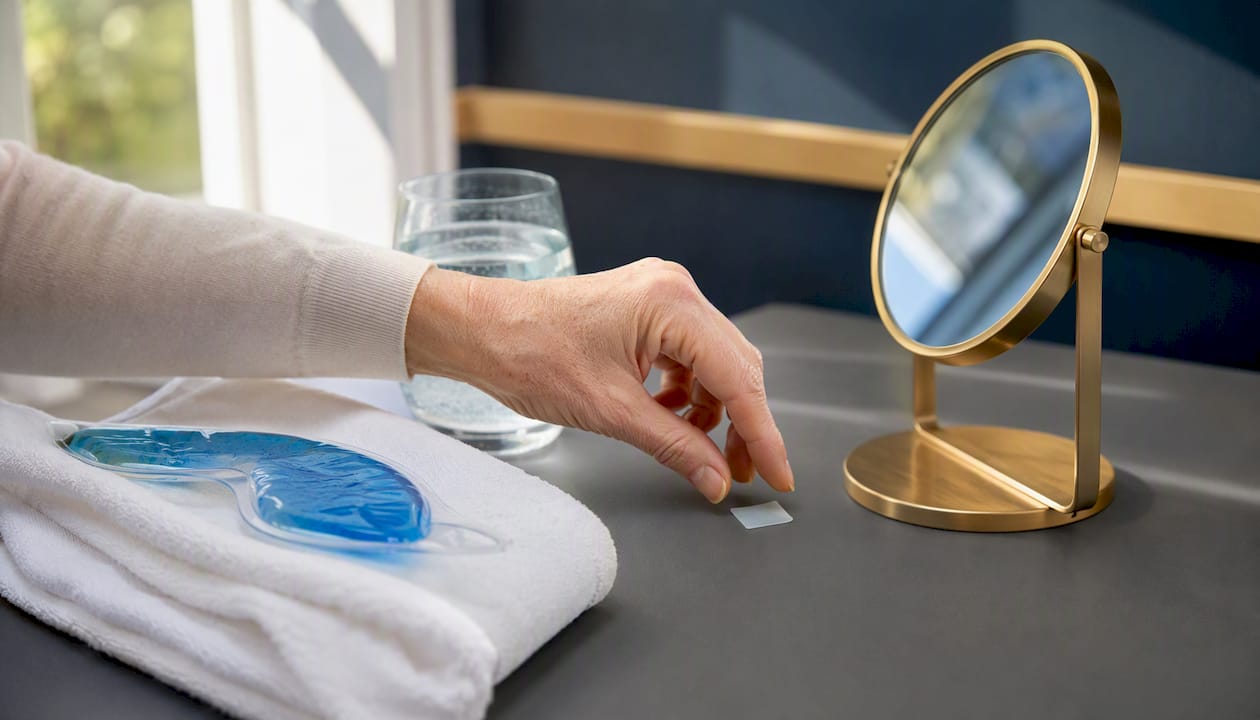
Periorbital oedema is swelling of the soft tissues surrounding the eye socket, caused by abnormal fluid accumulation or inflammation rather than the structural fat-pad changes that produce age-related “eye bags.” According to Medical News Today, true periorbital oedema is usually temporary and distinct from those permanent under-eye pouches that develop with age. For mild, short-lived puffiness with no other symptoms, cool compresses and simple lifestyle adjustments are safe first steps. Seek same-day medical review if you notice fever, pain when moving your eyes, any change in vision, or a bulging eye — those signs can indicate a serious infection that needs urgent treatment.
Safe at home (mild, no red flags): cool compress, head-elevated sleep, reduce salt and alcohol
See your GP today: swelling lasting more than 48–72 hours, tenderness, or spreading redness
Go to A&E immediately: fever with eye swelling, pain on eye movement, reduced or double vision, proptosis (eye bulging forward)
The Merck Manual and NCBI Bookshelf both emphasise that distinguishing a simple allergic reaction from a deeper orbital infection is the single most important clinical decision in periorbital swelling.
Table of Contents
What commonly causes periorbital oedema?
Healthline groups the causes of periorbital oedema into five broad categories, each with a slightly different mechanism.
Allergies and angioedema are among the most frequent triggers. Histamine release increases capillary permeability, allowing fluid to leak into surrounding tissue. Angioedema specifically tends to produce pale, painless, non-pitting swelling, whereas a straightforward allergic reaction is itchy and red. The Merck Manual notes that distinguishing these two presentations clinically matters because their management differs.
Infection is the cause that carries the most risk. Preseptal (periorbital) cellulitis is an infection confined in front of the orbital septum — the thin membrane separating the eyelid from the eye socket. It typically produces unilateral redness and swelling without affecting eye movement or vision. Orbital cellulitis, by contrast, sits behind the septum and can threaten sight. Recent sinusitis, a dental abscess, or a small skin wound near the eye can all seed either type of infection.
Trauma — a direct blow, insect sting, or surgical procedure — causes localised inflammation and bruising that pools fluid around the orbit. This is usually obvious from the history.
Systemic disease is worth considering when swelling is bilateral and persistent. Kidney disease reduces the body’s ability to excrete sodium and water; heart failure raises venous pressure; hypothyroidism causes a distinctive non-pitting myxoedematous swelling; and autoimmune conditions such as lupus can inflame periorbital tissues directly.
Lifestyle contributors are the most common cause of transient morning puffiness. High salt intake, excess alcohol, poor sleep, and prolonged lying flat all encourage fluid to settle around the eyes overnight. This type of puffiness typically resolves within a few hours of waking and standing upright.
One distinction worth making clearly: Wikipedia’s periorbital puffiness entry notes that true periorbital oedema is almost exclusively caused by fluid accumulation, whereas the structural “eye bags” many people notice with age result from fat-pad herniation and skin laxity — a fundamentally different process that cosmetic measures address rather than medical treatment.
Recognising periorbital swelling symptoms and when they signal danger
Common periorbital swelling symptoms include puffiness above or below one or both eyelids, a feeling of tightness or heaviness, mild itch, and sometimes watery eyes. These features alone, in an otherwise well person, are rarely alarming.
The red flags are a different matter entirely. The Merck Manual lists the following as requiring urgent assessment:
Fever alongside eyelid swelling
Severe eye pain or pain when moving the eye in any direction
Reduced visual acuity or double vision
Proptosis (the eye appearing to bulge forward)
Rapidly spreading redness extending beyond the eyelid
These signs can indicate orbital cellulitis or, in rare cases, cavernous sinus thrombosis — both potentially sight- or life-threatening conditions.
Preseptal versus orbital cellulitis: key differences
Feature | Preseptal (periorbital) cellulitis | Orbital cellulitis |
Location of infection | Anterior to orbital septum | Posterior to orbital septum |
Eye movement | Normal, painless | Restricted, painful |
Vision | Unaffected | May be reduced |
Proptosis | Absent | Often present |
Fever / systemic illness | Mild or absent | Usually present |
Urgency | GP same day / urgent care | A&E immediately |
According to NCBI Bookshelf, preseptal cellulitis is far more common and can often be managed in primary care, whereas orbital cellulitis requires hospital admission, intravenous antibiotics, and urgent imaging.
How to treat periorbital oedema: a cause-based guide
Treatment follows the underlying cause directly. There is no single “periorbital oedema treatment” that fits every presentation.
Bacterial preseptal cellulitis is treated with oral antibiotics, typically co-amoxiclav in the UK, for 5–7 days. A GP will usually review within 24–48 hours to confirm improvement.
Orbital cellulitis requires hospital admission, intravenous antibiotics, and urgent ophthalmology and ENT input. The Cleveland Clinic confirms that signs of orbital involvement mean same-day hospital transfer, not watchful waiting.
Allergic reactions are managed with oral antihistamines (such as cetirizine or loratadine) and, for more severe reactions, a short course of oral corticosteroids under clinician supervision. Anaphylaxis with facial swelling requires emergency treatment with adrenaline.
Systemic causes need their own management: diuretics for fluid overload from cardiac or renal disease, levothyroxine for hypothyroidism, and immunosuppression for autoimmune conditions — all under specialist guidance.
Safety reminders worth stating plainly:
Do not apply prescription topical steroids around the eyes without clinician advice.
Do not stop a prescribed medication because you suspect it is causing swelling — discuss it with your prescriber first.
Do not delay seeking help if any red flag develops while you are waiting to see if swelling settles.
Safe short-term measures to reduce puffiness at home
For mild, transient puffiness with no red flags, several simple measures can help within 24–72 hours.
Cool compress: A clean cloth soaked in cold water, held gently over closed eyelids for 10–15 minutes, reduces local inflammation and constricts superficial blood vessels.
Elevated sleep position: Sleeping with an extra pillow prevents fluid pooling around the eyes overnight.
Reduce salt intake: High sodium encourages fluid retention. The Walsall Healthcare NHS Trust salt-reduction leaflet offers practical guidance on cutting back.
Limit alcohol: Alcohol causes vasodilation and disrupts sleep quality, both of which worsen morning puffiness.
Stay hydrated: Paradoxically, adequate water intake helps the kidneys flush excess sodium.
Simple antihistamine: For suspected allergic puffiness, a non-drowsy antihistamine such as cetirizine is a reasonable first step.
Cold teabags or chilled cucumber slices: Both work as cool compresses with mild tannin or water content; the temperature is the active ingredient, not any special compound.
What to avoid:
Do not apply ice directly to skin — it can cause a cold burn.
Avoid vigorous massage over a swollen, tender eyelid, particularly if infection is possible.
Do not use over-the-counter vasoconstrictor eye drops (such as those marketed for red eyes) for more than a few days; rebound redness and swelling can follow prolonged use.
Pro Tip: A short, clinician-supervised pause of non-essential over-the-counter medications or supplements may reveal whether a drug is contributing to eyelid swelling. Discuss this with your GP before stopping anything, particularly if the medication is prescribed.
Mild transient puffiness often improves within 24–72 hours. Swelling that worsens or does not improve within that window needs clinical assessment — persistent swelling should not be managed indefinitely at home because an underlying systemic cause can be missed.
Which medicines can cause or worsen eyelid swelling?
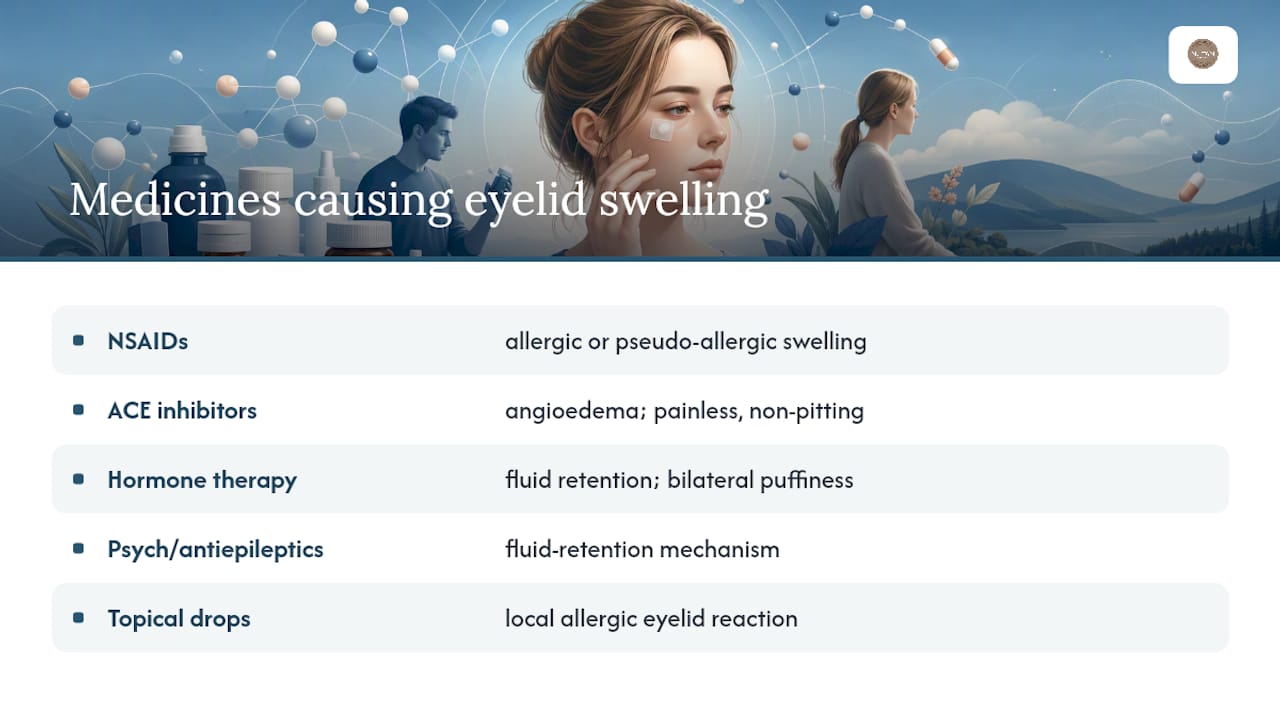
Several common drug classes are associated with periorbital or eyelid oedema, as detailed in the PMC eyelid oedema review.
Non-steroidal anti-inflammatory drugs (NSAIDs) such as ibuprofen and naproxen can trigger allergic or pseudo-allergic reactions that manifest as facial and eyelid swelling.
ACE inhibitors (for example, ramipril and lisinopril) are a well-recognised cause of angioedema — typically painless, pale, non-pitting swelling of the face, lips, and eyelids. This can occur even after months or years of uneventful use.
Hormone therapies including combined oral contraceptives and hormone replacement therapy can promote fluid retention, contributing to bilateral puffiness.
Certain psychotropic drugs and antiepileptics have been associated with periorbital oedema through fluid-retention mechanisms.
Topical ophthalmic agents — including some eye drops used for glaucoma — can cause localised allergic contact reactions on the eyelids.
The mechanism varies: some drugs cause true allergic hypersensitivity, others promote systemic fluid retention, and some cause direct local irritation. Clinicians sometimes recommend a supervised temporary pause of non-essential medications to assess whether a drug is the cause, rather than adding further treatments. Never stop a prescribed medicine without speaking to your prescriber first.
How long does periorbital oedema last?
The timeline depends almost entirely on the cause.
Preseptal cellulitis — usually shows clear improvement within 48–72 hours of starting appropriate oral antibiotics, though full resolution may take 7–10 days.
When to reassess: If swelling has not improved after 48–72 hours of home measures, or if any red flag develops at any point, seek clinical review. Chronic eyelid oedema that is painless and non-pitting can mimic age-related changes, but the PMC review cautions that missing an underlying inflammatory or systemic cause — particularly before any cosmetic procedure — can lead to poor outcomes.
Most mild cases resolve fully with appropriate management. Sight-threatening causes such as orbital cellulitis are treatable when identified and managed promptly.
Cosmetic options for eye-area puffiness: what they can and cannot do
Cosmetic measures address appearance, not disease. Before reaching for any topical product, it is worth being clear: if there is any possibility of infection, allergy, or systemic illness driving the swelling, a clinician should assess it first.
Once a medical cause has been excluded, cosmetic approaches can help manage the residual appearance of puffiness or the structural changes that come with age. Temporary options include make-up camouflage, instant eye-lift serums that use film-forming agents to tighten the appearance of the skin around the eye, and topical tighteners containing peptides or caffeine. Minimally invasive options such as dermal filler or blepharoplasty exist for structural fat-pad changes, but these are performed under clinician supervision and are not appropriate for active inflammation.
NuTan®'s NuEyes Rejuvenating Eye Serum is a cosmetic adjunct designed for appearance management once a medical cause has been excluded. The how-to-apply guide explains safe application technique for the instant eye-lift range. These products are not treatments for infection, angioedema, or systemic disease — they are appearance-focused tools for people whose swelling has already been assessed and cleared.
[
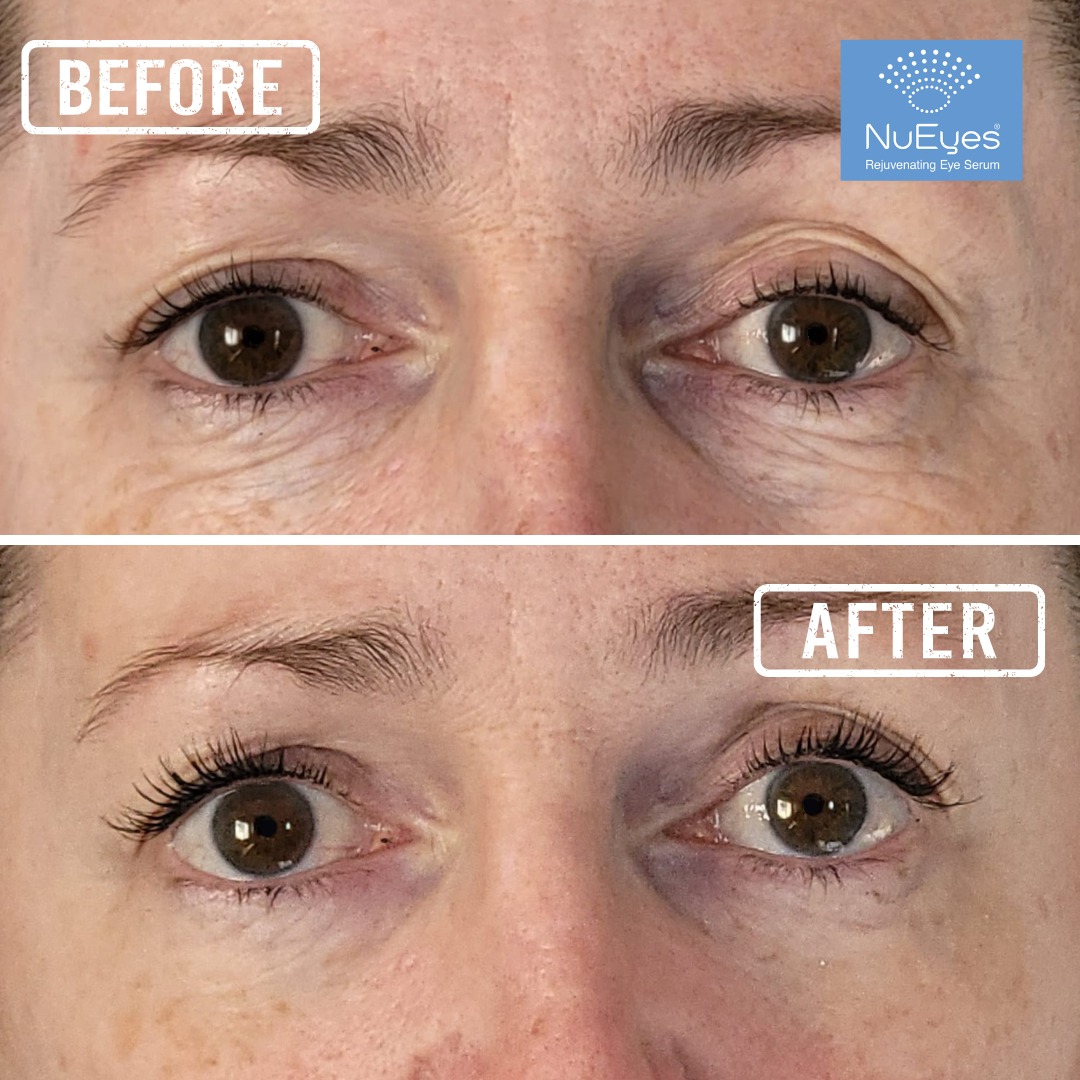
Safety reminder: Do not apply new topical products to inflamed, broken, or infected eyelid skin. Always introduce a new product on healthy skin and patch-test first.
Key takeaways
Periorbital oedema is almost always caused by fluid accumulation, and identifying the cause determines both urgency and treatment — red flags such as fever, pain on eye movement, or vision change require same-day hospital assessment, not home management.
Point | Details |
Definition | Periorbital oedema is swelling around the eye socket from fluid or inflammation, distinct from age-related fat-pad eye bags. |
Common causes | Allergies, preseptal cellulitis, trauma, systemic disease, and lifestyle factors such as high salt intake and poor sleep. |
Red flags | Fever, pain on eye movement, reduced or double vision, and proptosis require immediate A&E attendance. |
Treatment | Cause-specific: antibiotics for infection, antihistamines for allergy, systemic disease management for underlying conditions. |
NuTan® eye products | NuEyes cosmetic serums are appearance-focused adjuncts for use only after medical causes have been excluded. |
A reassuring perspective on periorbital swelling
The vast majority of periorbital swelling cases are benign. Most people who wake up with puffy eyes have slept badly, eaten a salty meal, or had a mild allergic reaction to something in their environment. That is genuinely the most likely explanation, and it resolves on its own.
What matters is knowing the difference between that ordinary puffiness and the small number of cases that need urgent attention. Fever plus eyelid swelling is not a combination to wait out at home. Pain when moving your eye is not something to monitor for a few more days. Those specific signs change the picture entirely, and acting on them quickly is what prevents serious complications.
For everything else — the persistent but non-urgent puffiness, the cosmetic concerns, the morning swelling that lingers a little longer than it used to — there are safe, practical steps available. Simple lifestyle changes, appropriate antihistamines, and well-formulated cosmetic products all have a role. The key is matching the response to the cause, and knowing when to hand the decision to a clinician.
NuTan® NuEyes: cosmetic care for the eye area

Once your GP or clinician has confirmed there is no underlying medical cause for your eye-area puffiness, NuTan®'s NuEyes range offers a gentle, appearance-focused next step. The NuEyes Rejuvenating Eye Serum is formulated to visibly reduce the appearance of puffiness and fine lines around the eyes, with results visible in under three minutes. It is a cosmetic product, clearly positioned as an adjunct to healthy skin care, not a substitute for medical assessment.
For a complete eye and face routine, the NuEyes and NuRejuv Beauty Bundle combines the eye serum with the NuRejuv Instant Lift Collagen Cream for a fuller approach to appearance management. Worldwide delivery is available. Always apply to healthy, non-inflamed skin, and introduce any new product gradually.
Useful sources and further reading
These authoritative sources are worth bookmarking, and you can share them with your GP if you are seeking a referral or specific tests.
FAQ
How do you reduce periorbital oedema quickly at home?
Cool compresses applied for 10–15 minutes, sleeping with your head elevated, and reducing salt and alcohol intake can ease mild puffiness within 24–72 hours. If swelling is painful, spreading, or accompanied by fever, seek medical review rather than continuing home treatment.
Which conditions can cause periorbital oedema?
Common causes include allergic reactions, preseptal cellulitis, trauma, kidney disease, heart failure, hypothyroidism, and autoimmune conditions. Lifestyle factors such as high salt intake and poor sleep also contribute to transient puffiness.
How do clinicians check for periorbital oedema?
A clinician assesses the history, examines eye movement, vision, and whether swelling is unilateral or bilateral, then orders blood tests (full blood count, CRP, thyroid function) or imaging if orbital involvement or a systemic cause is suspected.
Which drugs are known to cause periorbital swelling?
NSAIDs, ACE inhibitors (which can cause angioedema), hormone therapies, certain antiepileptics, and some topical ophthalmic agents are all associated with eyelid or periorbital swelling. Never stop a prescribed medicine without discussing it with your prescriber first.
This article provides general health information only and is not a substitute for professional medical advice. Always confirm current guidance and your individual circumstances with a qualified clinician or your GP.
Recommended
Comments