

How gradual tan products work: patches for a natural glow

Transdermal gradual-tan patches work by stimulating your skin’s own pigment-producing cells to create a real, lasting tan with over 70% less UV exposure than conventional tanning methods. The result is a natural-looking colour that does not rub off or wash away, because it comes from within your skin rather than sitting on the surface.
Here is what you can expect from the outset:
A gradual deepening of skin colour over days to weeks, not hours
A tan produced by your own melanin, not a surface stain
Significantly reduced UV exposure needed to achieve a comparable result
No transfer onto clothing or bedding
Key biological players: MC1R receptors, melanocytes, and NuTan®'s proprietary Nutan MSH-ComplexB
Consulting a GP before starting any new tanning regimen is sensible, particularly if you have a skin condition or take regular medication.
Table of Contents
How do gradual-tan patches actually trigger pigment in your skin?
How to choose a safe, effective gradual-tan product in the UK
NuTan® patches: how the product communicates mechanism and safety
How gradual-tan patches interact with other skincare products and medications
NuTan® tanning patches: where to find product and clinical information
How do gradual-tan patches actually trigger pigment in your skin?
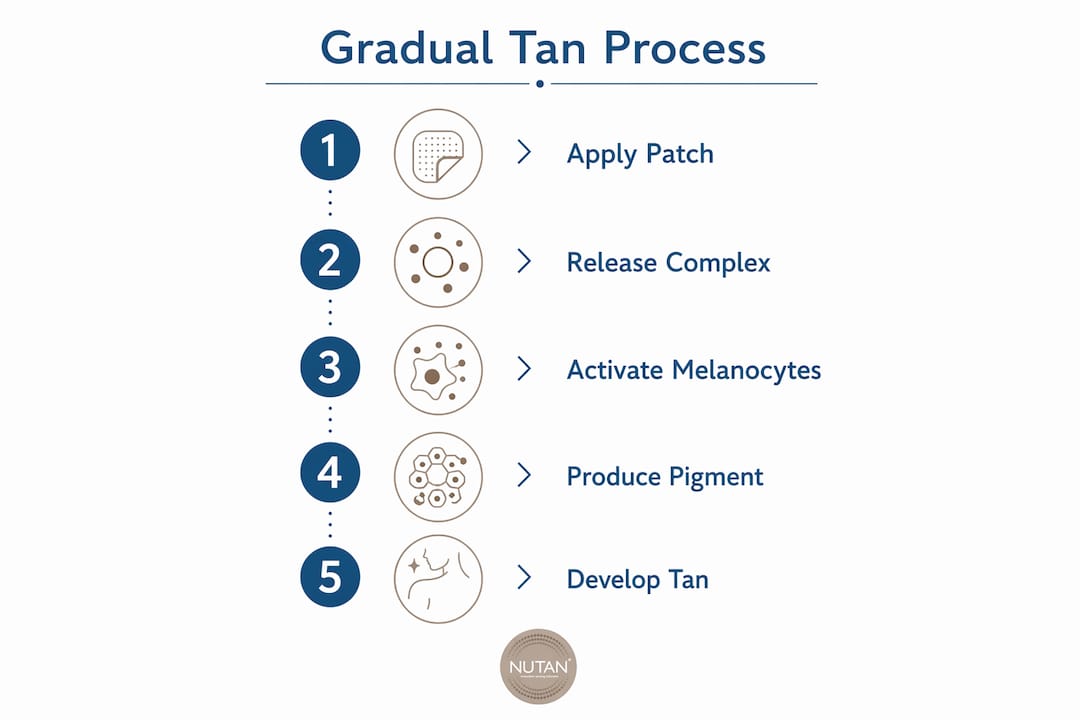
Your skin contains specialised cells called melanocytes, which sit in the deeper layers of the epidermis. Their job is to produce melanin, the pigment responsible for your natural skin colour and the darkening you see after sun exposure. Melanocytes are activated when a signalling molecule called alpha-melanocyte-stimulating hormone (a-MSH) binds to a receptor on their surface: the Melanocortin 1 Receptor, or MC1R.
NuTan® patches contain Nutan MSH-ComplexB, a proprietary beta-MSH (b-MSH) complex derived from a natural source. According to NuTan®, this compound binds and activates MC1R in the same way a-MSH does, triggering a cascade of biochemical events that ramp up melanin production and offer cellular protection. The pigment produced then migrates upward through the skin layers, creating a visible, gradually deepening tan.
This is fundamentally different from any surface-staining approach. No dye is deposited on your skin; your own cells do the colouring. The process mirrors what happens during natural sun exposure, but without requiring significant UV to drive it.
Pro Tip: Think of the patch as sending your skin a “start tanning” signal. Your melanocytes respond by producing pigment, exactly as they would in sunlight, just without the UV damage that usually comes with it.
Why patches are different from other tanning approaches
The delivery method matters enormously when it comes to how a tan is produced, how long it lasts, and what risks it carries.
Transdermal patches (e.g. NuTan®): Active molecules are absorbed through the skin to stimulate MC1R on melanocytes. The resulting tan is produced by your own pigment cells, does not wash off, and requires minimal UV. No needles, no surface staining.
Topical gradual lotions and sprays: These work by depositing colour-forming compounds onto the outermost dead skin cells. The colour sits on the surface and fades as those cells shed naturally, typically within 5–7 days. The tan is not produced by your skin’s biology.
Injectable systemic agents: Introduced directly into the bloodstream or subcutaneous tissue. Medical and regulatory bodies, including guidance cited by cancer specialists, warn against unregulated systemic tanning agents due to significant safety concerns.
For readers exploring discreet, non-injection options, transdermal patches sit in a distinct category: they are non-invasive, needle-free, and work with your skin’s own biology rather than colouring it from the outside.
Pro Tip: Patch placement on clean, dry skin away from bony areas or joints tends to give the most consistent transdermal absorption. Follow the manufacturer’s placement guidance carefully.
What timeline and results should you realistically expect?
Patience is part of the process. Because the tan is produced by your own melanocytes gradually increasing pigment output, the change is subtle at first and deepens over time.
Phase | Typical timeframe | What you may notice |
Early response | Days 3–7 | Subtle warmth or initial colour shift |
Progressive build | Weeks 1–3 | Visible, even deepening of skin tone |
Maintenance | Ongoing patch schedule | Sustained colour with minimal UV top-up |
Fading (if patches stopped) | Gradual over weeks | Natural fade as pigment production slows |
Most people notice an initial colour shift from around day 3–7, with progressive deepening over the following weeks as melanin production increases with continued patch use. |
A few practical points to keep in mind:
Moisturise regularly. Well-hydrated skin supports even pigment distribution and a smoother overall appearance.
Wear loose clothing after applying a patch to avoid any localised pressure on the site.
Dry areas such as elbows and knees may respond differently. Check our guide on what causes uneven tan if you notice patchiness.
Minimal UV exposure is still part of the process. NuTan® states patches require significantly less UV than standard tanning, but not zero UV.
For tan line concerns during the build phase, consistent patch use and brief, even sun sessions help maintain a uniform result.
Safety, side effects and UK considerations you should know
Patches are designed to work with your skin’s biology, but that does not mean they are entirely without risk for every person.
Common local reactions include mild redness, itching, or sensitivity at the patch site. These are usually temporary. Rarer systemic signs, such as nausea or headaches, warrant stopping use immediately and seeking medical advice.
Safety note: Always perform a patch test on a small area of skin for 24 hours before full use. If you have a diagnosed skin condition, are pregnant, or take regular prescription medication, consult your GP or a dermatologist before using any transdermal tanning product. Stop use and seek medical advice if you experience a severe or unexpected reaction.
UK sun safety guidance recommends applying sunscreen correctly whenever you have any UV exposure, even brief sessions. This applies alongside patch use: the reduced UV requirement does not eliminate the need for sun protection during any time spent outdoors.
The MHRA regulates medical devices and certain cosmetic products in the UK. Check that any transdermal product you purchase carries appropriate labelling and is sold by a transparent, identifiable manufacturer.
This article is general information, not medical advice. Confirm suitability for your own situation with a qualified healthcare professional.
How to choose a safe, effective gradual-tan product in the UK
Prioritise clinical evidence, ingredient transparency, and clear UK delivery and returns information above all else.
Checklist before you buy:
Does the manufacturer name the active ingredient clearly (e.g. Nutan MSH-ComplexB for patches)?
Is there reference to dermatological testing or clinical study data?
Are manufacturing standards and ingredient sourcing disclosed?
Does the product require UV to activate, and if so, how much?
Is there a recommended patch schedule and clear usage instructions?
Does the seller offer UK delivery, a contact point, and a returns policy?
Questions worth asking directly:
Has this product undergone independent dermatological testing?
What is the recommended patch replacement cadence?
Are there any contraindications listed on the label?
Is the active ingredient naturally sourced and traceable?
Third-party verification and dermatological testing notes are primary trust signals. A manufacturer willing to share clinical study references and testing data is demonstrating a level of transparency that matters when you are choosing a product that interacts with your skin’s biology. For broader guidance on integrating tanning into your skincare routine, NuTan® publishes practical advice on its site.
NuTan® patches: how the product communicates mechanism and safety
NuTan® patches contain Nutan MSH-ComplexB, a b-MSH complex the brand states binds MC1R on melanocyte surfaces to boost natural pigment production. The active ingredient comes from a natural source and is formulated in-house.
Key product features, as stated by NuTan®:
Mechanism: MC1R activation via Nutan MSH-ComplexB triggers increased melanin production and cellular protection
UV requirement: Over 70% less UV than standard tanning methods
Tan quality: Natural-looking, does not rub or wash off because it is produced by your own skin cells
Delivery: Transdermal, pain-free, needle-free
Worldwide delivery available, including throughout the UK
NuTan® advises consulting a GP if you are unsure whether patches are suitable for you, and following the labelled instructions throughout use. Clinical study data and dermatological testing details are available on the product pages for readers who want to review the evidence before purchasing.
How gradual-tan patches interact with other skincare products and medications
This is an area where caution and transparency matter. Transdermal delivery means active molecules pass through the skin barrier, so anything that affects that barrier can influence how a patch performs or how your skin responds.
Skincare interactions to be aware of:
Exfoliants and acids (AHAs, BHAs, retinoids): These accelerate skin cell turnover and can affect absorption rates at the patch site. Avoid applying them directly over or immediately around the patch.
Heavy moisturisers or oils: Applied directly under a patch, these may reduce adhesion and interfere with transdermal absorption. Apply moisturiser away from the patch site.
Sunscreens: Apply sunscreen as normal to exposed skin. Avoid applying it directly over the patch itself.
Medication interactions:
Certain medications affect skin permeability, pigmentation pathways, or immune responses in ways that could interact with an MSH-based transdermal product. These include immunosuppressants, some hormonal therapies, and medications that cause photosensitivity. If you take any regular prescription medication, discuss patch use with your GP before starting. This is not a theoretical caution; it is standard practice for any transdermal product.
Keeping a simple log of your patch schedule alongside any new skincare products you introduce makes it easier to identify the cause if your skin reacts unexpectedly.
Key takeaways
NuTan® transdermal patches stimulate MC1R on melanocytes using Nutan MSH-ComplexB, producing a real, wash-resistant tan while reducing UV exposure compared to conventional tanning methods.
Point | Details |
How patches work | Nutan MSH-ComplexB activates MC1R on melanocytes, triggering your skin’s own pigment production. |
UV reduction | NuTan® states patches require significantly less UV than standard tanning to achieve a comparable result. |
Timeline | Expect gradual colour change from days 3–7, with progressive deepening over weeks 1–3. |
Safety first | Always patch test for 24 hours and consult a GP if you have a skin condition or take regular medication. |
NuTan® patches | The real-world example of transdermal tanning: natural pigment, no surface stain, worldwide delivery. |
A note on responsible use and what we believe matters most
The conversation around tanning has shifted considerably. Readers are asking smarter questions: not just “how do I get a tan?” but “how does this actually work, and is it safe for me?” That shift is worth acknowledging, because it reflects a genuine change in how people approach their skin health.
What stands out about the transdermal patch approach is that it works with the skin’s existing biology rather than bypassing it. Stimulating MC1R to increase melanin production is the same pathway your skin uses naturally. The difference is that patches allow that process to happen with a fraction of the UV exposure typically required, which is meaningful from a skin health perspective.
The honest caveat is this: no tanning method is entirely without consideration. Patch testing, following usage instructions, and speaking to a GP when in doubt are not optional extras. They are the foundation of using any transdermal product responsibly. The goal is a sun-kissed glow you feel confident about, not just one you can see.
NuTan® tanning patches: where to find product and clinical information
NuTan® offers transdermal tanning patches containing Nutan MSH-ComplexB, with worldwide delivery including across the UK. The patches are designed for people who want a natural-looking tan without relying on surface stains or high UV exposure.
You can review full product details, usage instructions, and available clinical information on the NuTan® patches product page. A multi-pack option is also available for those who want to maintain results over a longer period. Read through the product FAQ and ingredient disclosure before purchasing, and if you have any questions about suitability, the brand encourages you to consult your GP first.
Useful sources
NuTan® non-invasive tanning methods post — primary source for MC1R mechanism, Nutan MSH-ComplexB, and UV reduction claims
Cancer Center: how to tan safely — medical commentary on systemic tanning agents and safer alternatives
Holland & Barrett: sunbathing and tanning safely — UK-relevant sun safety and sunscreen guidance
NuTan® uneven tan guide — practical advice on achieving an even result
NuTan® skincare and tanning routine guide — integrating patches into your existing routine
Your GP or a registered UK dermatologist — for personalised advice on suitability, contraindications, and medication interactions
FAQ
How do gradual-tan patches work differently from surface tanners?
Patches deliver an MSH-like molecule transdermally to activate MC1R on melanocytes, stimulating your skin to produce its own melanin. Surface tanners deposit colour-forming compounds onto dead skin cells, which fade as those cells shed.
How long before NuTan® patches produce a visible tan?
Most people notice an initial colour shift from around day 3–7, with progressive deepening over weeks 1–3.
Do NuTan® patches require UV exposure to work?
A small amount of UV exposure is still part of the process, but NuTan® states the patches require over 70% less UV than conventional tanning methods to achieve a comparable result.
Is it safe to use tanning patches alongside other skincare products?
Avoid applying exfoliants, retinoids, or heavy oils directly at the patch site, as these can affect absorption. If you take prescription medication, consult your GP before use, as some medications interact with transdermal delivery or pigmentation pathways.
What should I look for when buying a gradual-tan patch in the UK?
Prioritise clear active ingredient disclosure (such as Nutan MSH-ComplexB), references to dermatological testing, transparent manufacturing information, and a seller offering UK delivery with accessible customer support.
Recommended
Comments