

Is a tan with minimal UV possible? Your safe glow guide 2026
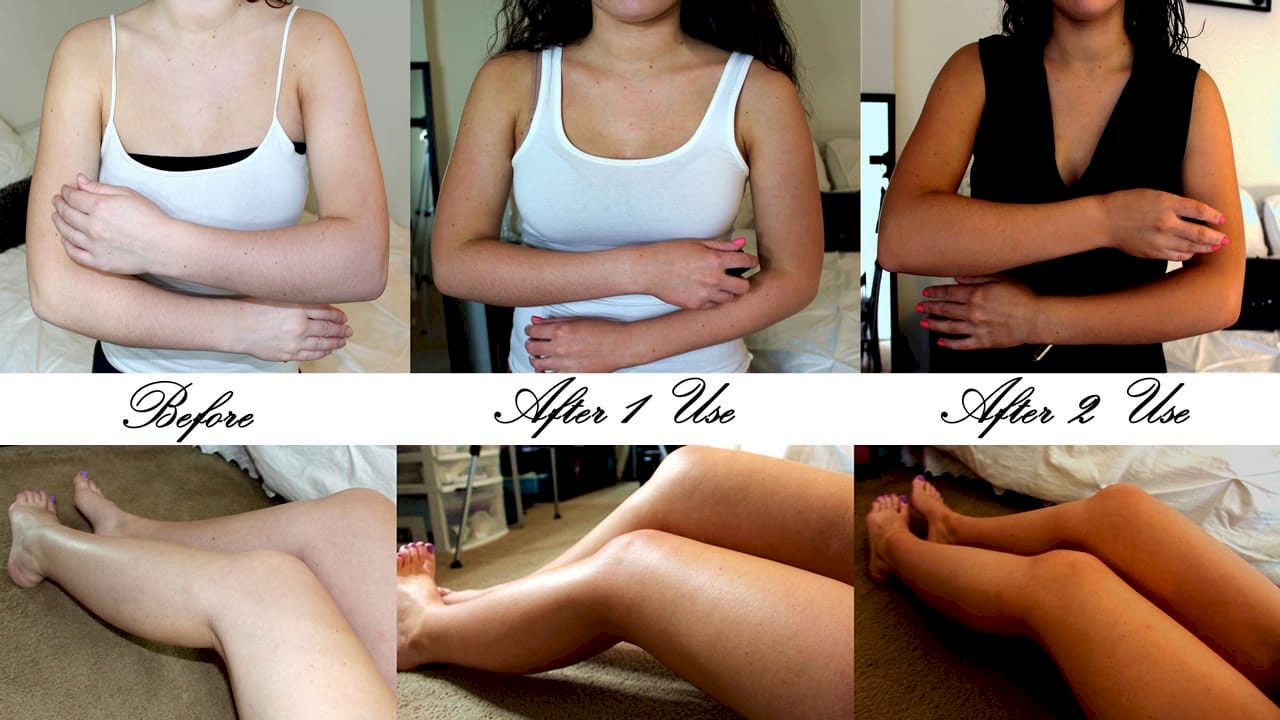
Yes, a tan with minimal UV exposure is entirely possible. Low UV tanning methods either stimulate your skin’s own pigment production or temporarily colour the outer skin layer, and neither approach causes the DNA damage that sunlight and tanning beds do. Dermatologists now consistently endorse UV-free alternatives as the only genuinely safe route to a bronzed appearance, and 2026 brings more options than ever.
Safe UV-free tanning methods include:
Transdermal tanning patches (such as NuTan®) that activate your skin’s natural melanin production with significantly less UV exposure than conventional tanning
Gradual tanning lotions and sprays that temporarily colour the outer skin layer
Professional spray tans applied in salons or clinics
Skincare products including tinted moisturisers, bronzing serums, and glow-boosting formulas
Dietary approaches using beta-carotene-rich foods and supplements to support a natural glow
Why excessive UV tanning causes harm, and what actually happens in your skin
Your skin tans because UV radiation triggers melanocytes, the pigment-producing cells, to generate more melanin. That darkening looks appealing, but the FDA confirms it is a sign of damage, not health. The skin produces melanin as a defensive response to cellular injury, not as a wellness process.
The risks are well documented:
Excessive UV exposure causes direct DNA damage, increasing the risk of basal cell carcinoma, squamous cell carcinoma, and melanoma
A natural base tan offers only around SPF 2–4 protection, which is far below the minimum SPF 15 recommended by dermatologists
Even low UV index levels cause cumulative damage; no safe UV threshold for tanning exists
Tanning beds emit UVA rays at intensities far exceeding natural sunlight, raising melanoma risk substantially
Artificially induced colour, by contrast, works on the skin’s surface without triggering that damage cascade. That distinction is the foundation of every UV-free method covered here.
How self-tanning products create a tanned look without UV
Self-tanning products work by chemically reacting with amino acids in the outermost, dead layer of skin to produce a brown colour. The Skin Cancer Foundation confirms this process involves only the dead cell layer, not the living tissue beneath, and sunless tanners are considered non-toxic and non-carcinogenic in FDA testing.
Key categories and tips:
Gradual tanning lotions: build colour slowly over several applications; ideal for first-time users wanting a subtle result
Mousse and foam formulas: dry quickly and suit those who want more control over depth of colour
Professional spray tans: applied by a technician in a salon, offering an even, all-over result for events or holidays
Bronzing sprays: temporary colour that washes off, useful for a single occasion
One important caveat: self-tanners provide no UV protection whatsoever. Dermatologist Dr Arielle Kauvar, quoted by the Skin Cancer Foundation, is clear that “sunscreen and protective clothing should always be used in conjunction with sunless tanners.”
Skincare products that support a healthy, glowing appearance
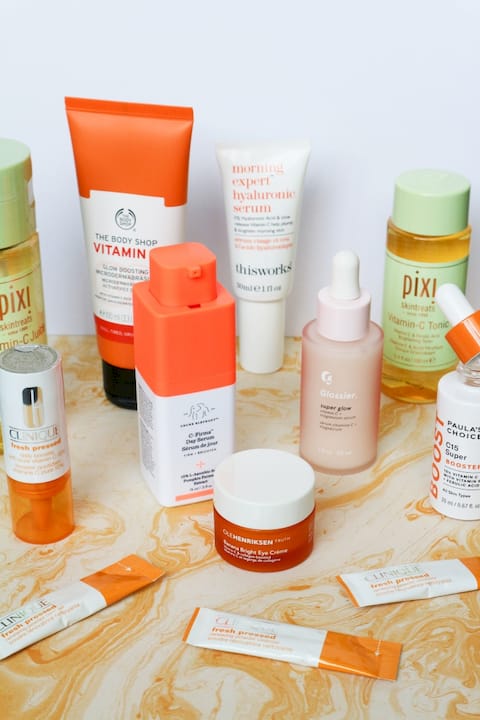
Good skincare does not create a tan, but it can make your natural skin tone look more radiant and help any tanning method perform better. Hydration is the starting point. Well-moisturised skin reflects light more evenly, which alone creates the impression of a healthier, warmer tone.
Useful ingredients and products:
Hyaluronic acid and glycerin: draw moisture into the skin, plumping the surface and reducing dullness
Vitamin C serums: brighten uneven tone and support collagen production for a more luminous complexion
Tinted moisturisers and BB creams: add a sheer wash of warm colour without any chemical tanning reaction
Antioxidant-rich formulas (containing vitamins C and E, niacinamide): protect skin cells from environmental stress and support an even tone
Broad-spectrum SPF 30+: non-negotiable daily protection, regardless of which tanning method you use
For those interested in aesthetic skin treatments that complement a UV-free routine, professional clinics offer options ranging from hydrating facials to skin-tone correction procedures.
Pro Tip: Apply a vitamin C serum in the morning and a rich moisturiser at night. This two-step routine visibly brightens skin within two to three weeks, making any tanning method look more natural.
Diet and nutrition to support a natural tanned glow
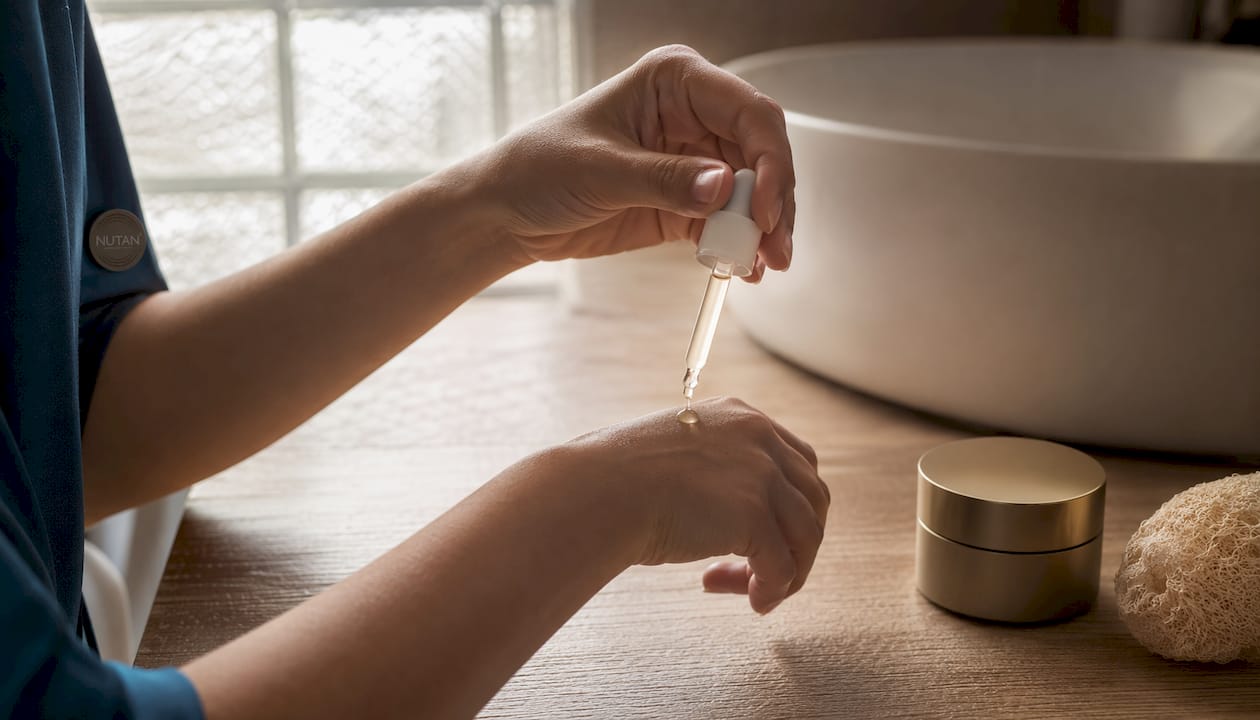
What you eat genuinely influences your skin tone. Beta-carotene, the pigment found in orange and yellow plant foods, accumulates in the skin and imparts a warm, golden hue. It also converts to retinol in the body, which supports melanin synthesis.
Foods and supplements that help:
Carrots, sweet potatoes, and butternut squash: among the richest dietary sources of beta-carotene
Mangoes, apricots, and cantaloupe: provide beta-carotene alongside skin-supportive vitamin C
Spinach and kale: deliver beta-carotene plus lutein, which supports skin cell health
Lycopene-rich foods (tomatoes, watermelon): associated with a warmer, more even complexion
Beta-carotene supplements: typically show a visible effect on skin tone after around one month of consistent use
Diet alone will not replicate the depth of a UV tan or a self-tanning product. Think of it as a foundation that makes every other method work better, while also supporting long-term skin health.
How NuTan® transdermal patches work with minimal UV exposure
NuTan® patches represent a genuinely different approach to tanning. Rather than colouring the skin’s surface, they work from within, stimulating your skin’s own biological tanning process. The patches contain NuTan’s proprietary MSH-ComplexB, a Beta-melanocyte-stimulating hormone (b-MSH) derived from a natural source, which binds to and activates the Melanocortin 1 Receptor (MC1R) on the surface of melanocytes.
Once MC1R is activated, a series of biochemical events increases melanin production naturally. The result is a real, natural tan that does not rub off or wash away, because it is produced by your own pigment cells, not applied to the skin’s surface.
Key benefits of NuTan® patches:
Require significantly less UV exposure than conventional tanning methods to achieve a comparable result
Produce a natural tan, not a surface stain, so colour does not transfer to clothing or fade unevenly
Pain-free and non-invasive; simply apply the patch and allow the formula to work transdermally
Suitable for a range of skin types; worldwide delivery available
Backed by chemical engineering expertise and aligned with 2026 dermatology guidance on UV-minimal tanning
Pro Tip: For best results with NuTan® patches, apply to clean, dry skin and combine with brief, sensible sun exposure. The patches do the heavy lifting; you need far less time outdoors than with any other natural tanning method.
Comparing UV-free tanning methods: spray tans, gradual tanners, and patches
Different methods suit different needs. Here is how the main UV-free options compare:
Method | How it works | Duration | UV needed? |
Gradual tanning lotion | Colours outer skin layer over multiple uses | 5 days | No |
Professional spray tan | Technician-applied formula for even coverage | 5–10 days | No |
Bronzing spray or powder | Temporary surface colour, washes off | Until washed | No |
NuTan® transdermal patch | Stimulates natural melanin via MC1R activation | Weeks (natural tan) | Minimal (70%+ less) |
Diet and skincare | Supports skin tone and radiance | Ongoing | No |
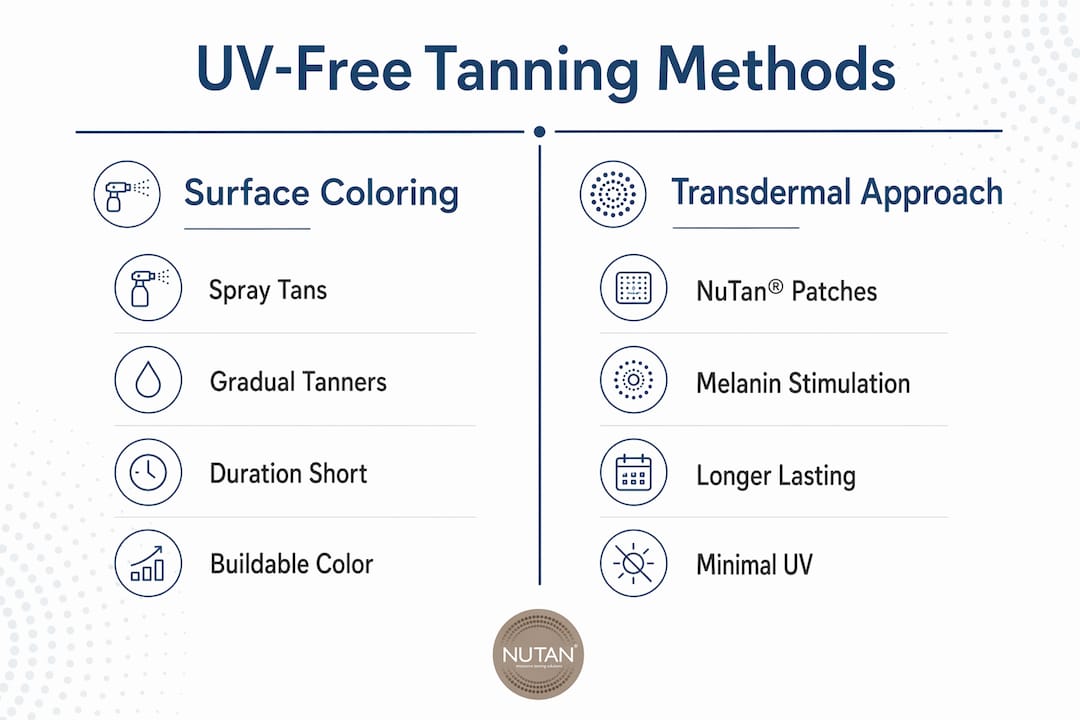
Spray tans suit those wanting a quick, event-ready result. Gradual tanners work well for people who prefer to build colour slowly at home. NuTan® patches are the only method that produces a genuine, lasting tan by working with your skin’s biology rather than colouring its surface. You can read more about non-invasive tanning methods that are safe and effective.
How to choose safe and effective UV-free tanning products
The market is wide, and not every product delivers what it promises. A few clear criteria separate the reliable from the rest.
Check the ingredient list. For surface-colouring products, look for formulas free from parabens and synthetic fragrances, which are the most common sources of skin irritation. For patch-based methods, look for clinically described active ingredients with a clear mechanism of action.
Consider your skin tone and sensitivity. Fairer skin tones tend to develop orange undertones with poorly formulated surface tanners; look for products that specify a “natural” or “olive” finish. Those with sensitive skin should patch-test any new formula on the inner arm for 24 hours before full application.
Prioritise SPF alongside any tanning product. No UV-free tanning method provides sun protection. A broad-spectrum SPF 30 or higher, applied daily, is non-negotiable.
Look for transparency. Reputable brands publish their active ingredients, explain how the product works, and do not make exaggerated claims. NuTan® publishes the mechanism behind its MSH-ComplexB formula clearly, which is the standard you should expect from any credible product.
Common myths about tanning without UV
“A fake tan looks obviously artificial.” Modern formulations, applied correctly, produce results that are difficult to distinguish from a natural tan. Gradual tanners in particular build colour in a way that looks entirely believable.
“You don’t need sunscreen if you have a tan.” False, and one of the most persistent misconceptions. Whether your colour comes from UV, a spray tan, or a patch, sunscreen remains essential every time you go outdoors.
“UV-free tanning products are not regulated or tested.” Sunless tanning formulas have passed FDA safety evaluations and are classified as non-toxic and non-carcinogenic. Transdermal patch technologies are subject to regulatory scrutiny in the UK.
“A base tan protects your skin before a holiday.” Dermatologists at the American Cancer Society are unambiguous: a base tan offers only around SPF 2–4 and still represents skin damage. It is not a protective measure.
Professional UV-free tanning services in the UK
Spray tanning is the most widely available professional UV-free service across the UK, offered in beauty salons, mobile tanning services, and dedicated tanning studios. A professional application typically lasts 5–10 days and produces a more even result than most at-home methods, particularly for the back and hard-to-reach areas.
Some aesthetic clinics now offer skin-tone enhancement treatments, including pigmentation treatments and light-based therapies that improve skin clarity and radiance without UV exposure. These are not tanning treatments per se, but they complement UV-free tanning by creating a more even, luminous base.
When choosing a salon or clinic, look for trained technicians, good ventilation in spray tan booths, and clear aftercare guidance. A reputable service will always advise on SPF use and realistic expectations for colour duration.
NuTan® patches are available with worldwide delivery, making it straightforward to start your UV-free tanning routine wherever you are. For a natural tan that lasts and does not wash off, explore the NuTan® tanning patches and discover what stimulating your skin’s own biology can achieve. Stay radiant, stay safe.
Key takeaways
Achieving a genuine tan without UV damage is possible in 2026, and NuTan® patches are the only method that produces a lasting, natural result by activating your skin’s own melanin production with significantly less UV exposure than conventional tanning.
Point | Details |
UV tanning always causes harm | Every UV tan represents DNA damage; a base tan offers only around SPF 2–4 protection. |
UV-free methods are safe and varied | Patches, spray tans, gradual tanners, skincare, and diet all offer colour without UV damage. |
NuTan® patches work differently | They activate MC1R to stimulate natural melanin, producing a real tan that does not rub or wash off. |
SPF is always required | No UV-free tanning method provides sun protection; SPF 30+ is essential every day outdoors. |
Diet supports skin tone | Beta-carotene-rich foods and supplements enhance a natural glow, with visible effects after around one month. |
FAQ
Can you get a tan with minimal UV light?
Yes. Methods such as NuTan® transdermal patches stimulate natural melanin production with minimal UV, while spray tans and gradual tanners colour the skin’s surface without any UV exposure at all.
Can you tan when the UV index is 0?
Surface-colouring methods like spray tans and gradual tanners work regardless of UV index. NuTan® patches require only minimal UV exposure, over 70% less than conventional tanning, so a UV index of 0 would not support the natural melanin pathway the patches activate.
Will 30 minutes in the sun give you a tan?
Possibly, depending on skin type and UV index, but any resulting tan is a sign of skin damage, not a healthy outcome. UV-free methods achieve a comparable result without that cellular harm.
What is the lowest UV level needed to tan naturally?
Even a UV index of 1–2 can cause slow tanning, but it also causes cumulative skin damage. There is no safe UV threshold for tanning; UV-free methods are the only way to achieve colour without incurring that risk.
Recommended
Comments