

UK: 10–20 Minute Fixes for Under Eye Puffiness, Backed by Doctors

Cold compresses, consistent sleep, and allergy control reduce under eye puffiness faster than any other home measure, usually within minutes to a few days. Persistent bags that don’t respond to these steps are often structural, not fluid-related, and tend to need clinical treatment rather than skincare. The NHS and Johns Hopkins Medicine both back this triage approach. Some skincare brands apply the same logic across their product ranges.
TL;DR:
Most morning puffiness responds quickly to cold compresses, sleep with elevated head, and allergy management, but persistent structural issues need medical treatment.
Fluid retention, allergies, and aging are the primary causes of under-eye puffiness, each requiring different remedies and self-triage.
Caffeine-based eye creams offer the strongest evidence for reducing acute puffiness, while long-term fixes often involve fillers or surgical procedures.
Structure-related bags usually do not improve with lifestyle changes and typically require clinical interventions like fillers or blepharoplasty.
Applying topical products correctly with gentle tapping and proper layering enhances effectiveness and minimizes irritation.
Table of Contents
What causes under-eye puffiness?
Puffiness and bags are not always the same problem, and the cause dictates which remedy actually works. Fluid retention is the most common trigger. Lying flat overnight lets fluid pool under the eyes, and a salty dinner or a glass of wine the night before makes it worse by drawing water into the surrounding tissue. This type of puffiness is usually temporary and responds well to the quick fixes covered below.
Allergies are the second major driver. Pollen, dust, pet dander, or a reaction to a new mascara or eye cream can inflame the delicate skin around the eyes, causing swelling that flares seasonally or after specific exposures. Contact dermatitis from cosmetics behaves similarly but is triggered by direct contact with an irritant ingredient.
Ageing changes the picture entirely. Skin around the eyes loses collagen and elasticity over time, and the fat pads that normally cushion the eyeball can herniate forward, creating a permanent bulge rather than temporary swelling. That’s structural, not fluid-based, and a clinical review of periorbital treatments notes that management has to match the actual cause rather than a generic “puffy eyes” label.
A quick way to self-triage:
Worse in the morning, better by afternoon? Likely fluid retention.
Itchy, red, or seasonal? Likely allergy-related.
Present all day, every day, for months? Likely structural.
Only on one side, painful, or with discharge? Needs medical attention, not home care.
How can I reduce puffy eyes fast?
Most morning puffiness responds within 10 to 20 minutes if you use the right technique, and consistent habits keep it from coming back.
Apply a cold compress. Use a chilled (not frozen) flannel, gel eye mask, or spoons kept in the fridge. Hold against closed eyes for 5 to 10 minutes, up to three times a day. Chilled tea bags work through the same cooling and vasoconstriction effect rather than any special property of the tea itself, according to WebMD.
Sleep with your head slightly elevated. An extra pillow stops fluid settling around the eyes overnight. Combine this with consistent 7 to 9 hours of sleep a night, since sleep debt is one of the most reliable causes of morning puffiness.
Manage allergies directly. An oral antihistamine, a saline nasal rinse, or antihistamine eye drops can settle allergic swelling within a day. If puffiness flares at the same time every year, that’s worth mentioning to a pharmacist or GP.
Cut evening salt and alcohol. Both encourage fluid retention overnight. The NHS guidance on dietary salt is a sensible baseline if swelling is a recurring issue rather than an occasional one.
Stay hydrated during the day. Counterintuitively, under-hydration can make the body retain more fluid, not less.
Pro Tip: Keep your under-eye cooling tool in the fridge door, not the freezer. Anything cold enough to feel painful on contact can irritate thin periorbital skin instead of soothing it.
One caution worth flagging directly: some online advice recommends haemorrhoid creams for eye puffiness because they contain vasoconstrictors. Clinical resources on periorbital care generally advise against this. These creams aren’t formulated for eye contact, and the irritation risk outweighs any short-term tightening.
Which skincare ingredients actually reduce puffiness?
Not every eye cream ingredient has equal backing, and knowing the difference saves money and irritation.
Caffeine has the strongest evidence base. A peer-reviewed evaluation of caffeine gels found genuine vasoconstrictor and anti-inflammatory effects that reduce puffiness when the formulation is right.
Retinoids and retinol improve skin thickness and firmness over weeks, which helps with sagging rather than acute swelling.
Vitamin C supports collagen and brightens shadowing, useful for dark circles more than puffiness itself.
Niacinamide calms inflammation and strengthens the skin barrier, helpful for anyone whose puffiness is allergy or irritation driven.
Hyaluronic acid hydrates without adding weight, which matters because dehydrated skin can paradoxically look puffier.
The skin under the eyes is markedly thinner than skin elsewhere on the face, so dermatological guidance recommends introducing actives gradually. Patch test behind the ear first, then use a new product every other night for two weeks before daily use.
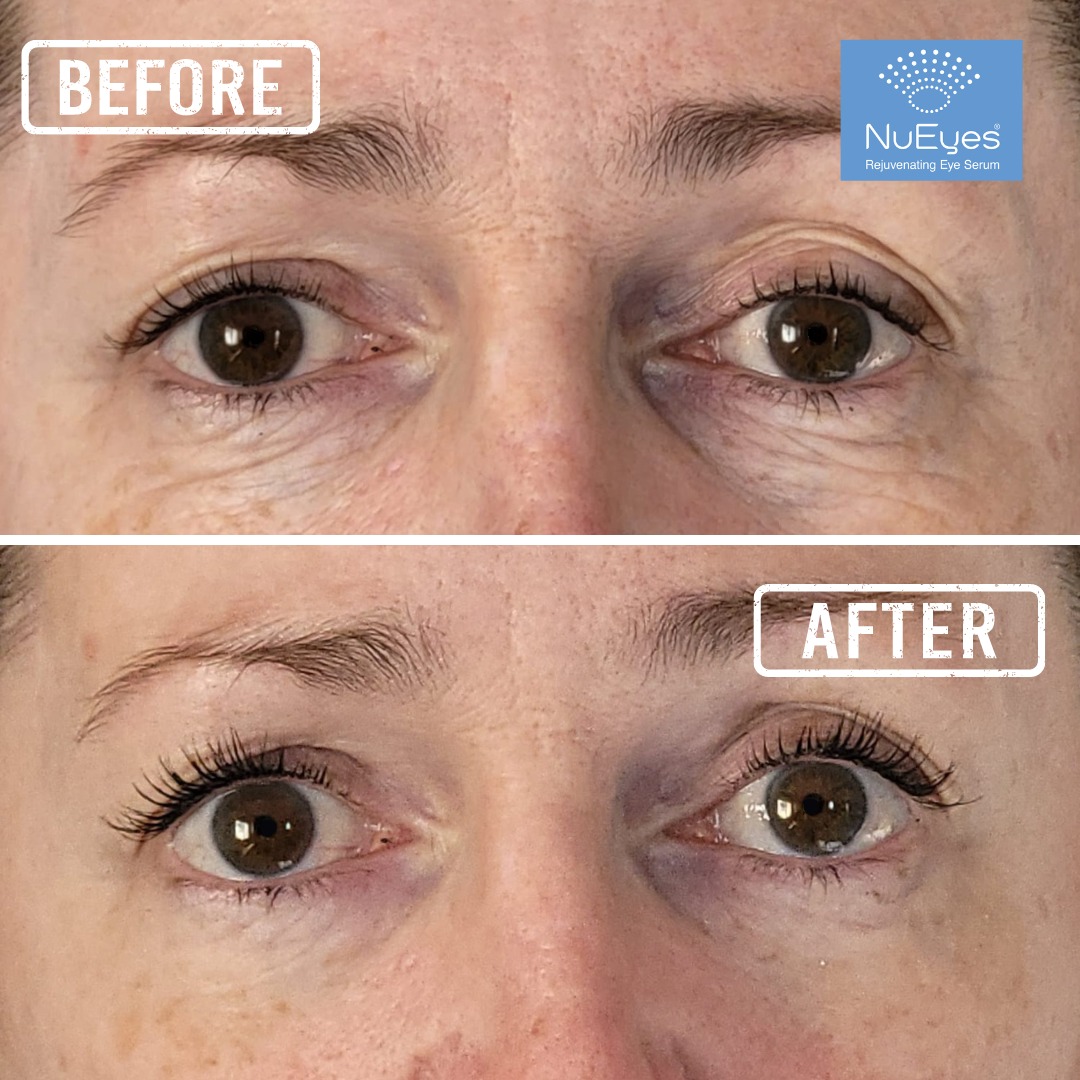
It’s worth separating “instant lift” products from active-ingredient creams entirely. Instant-effect formulas work by temporarily tightening the skin’s surface, typically using film-forming or peptide-based ingredients, and the visible smoothing usually lasts a few hours rather than producing lasting structural change. Some brands offer instant-effect formulas that work by temporarily tightening the skin’s surface, typically using film-forming or peptide-based ingredients, with visible smoothing lasting a few hours rather than producing lasting structural change.
[
What medical treatments help with stubborn eye bags?
When puffiness is structural rather than fluid-based, topical products have a ceiling. Johns Hopkins Medicine confirms that home remedies can help temporary swelling, but prominent, permanent bags usually need medical or surgical correction.
Non-surgical options include:
Hyaluronic acid fillers, which fill the hollow beneath the bag to smooth the transition; results last roughly 6 to 12 months.
Laser resurfacing, which tightens skin and improves texture over several sessions.
Chemical peels, useful mainly for pigment and fine texture rather than volume.
Platelet-rich plasma (PRP), which some clinics use to stimulate collagen, though results vary between patients.
For prices on non-surgical instant options in the UK, costs typically range from around £5 to £60 depending on the product or procedure chosen.
Surgically, lower eyelid blepharoplasty removes or repositions herniated fat and excess skin. It’s the only option that permanently corrects a genuinely bulging fat pad, with recovery typically running one to two weeks before bruising settles. Clinicians often combine treatments, pairing filler with resurfacing for example, because pigment, volume, and skin laxity rarely improve with a single approach. At consultation, ask about the clinician’s specific experience with periorbital procedures, how many similar cases they’ve handled, and what the realistic percentage improvement looks like for your anatomy.
When should you see a doctor about eye puffiness?
Most puffiness is cosmetic and safe to manage at home, but certain signs need urgent attention rather than a skincare routine.
See a doctor urgently if: the swelling is sudden and one-sided, painful, accompanied by vision changes, or comes with discharge or fever, since these can signal infection or another medical condition rather than simple fluid retention.
Book a routine consultation if: bags are structural, unchanged after weeks of consistent home care, or affecting your confidence enough that you’re considering fillers, peels, or blepharoplasty.
Prepare for the appointment by: bringing photos showing how the puffiness has changed over time, noting how long it’s been present, and listing what you’ve already tried, including any creams or antihistamines.
Getting the most from topical treatments
The biggest mistake with eye creams isn’t choosing the wrong ingredient. It’s applying it wrong. Periorbital skin is thinner and more reactive than the rest of the face, so technique matters almost as much as formulation.
Apply with the ring finger, which naturally exerts the lightest pressure of any finger, using a gentle tapping or dabbing motion rather than rubbing. Rubbing stretches already-fragile skin and can worsen puffiness by irritating tissue that’s already inflamed. Work from the inner corner outward, following the orbital bone rather than applying directly onto the delicate skin right at the lash line.
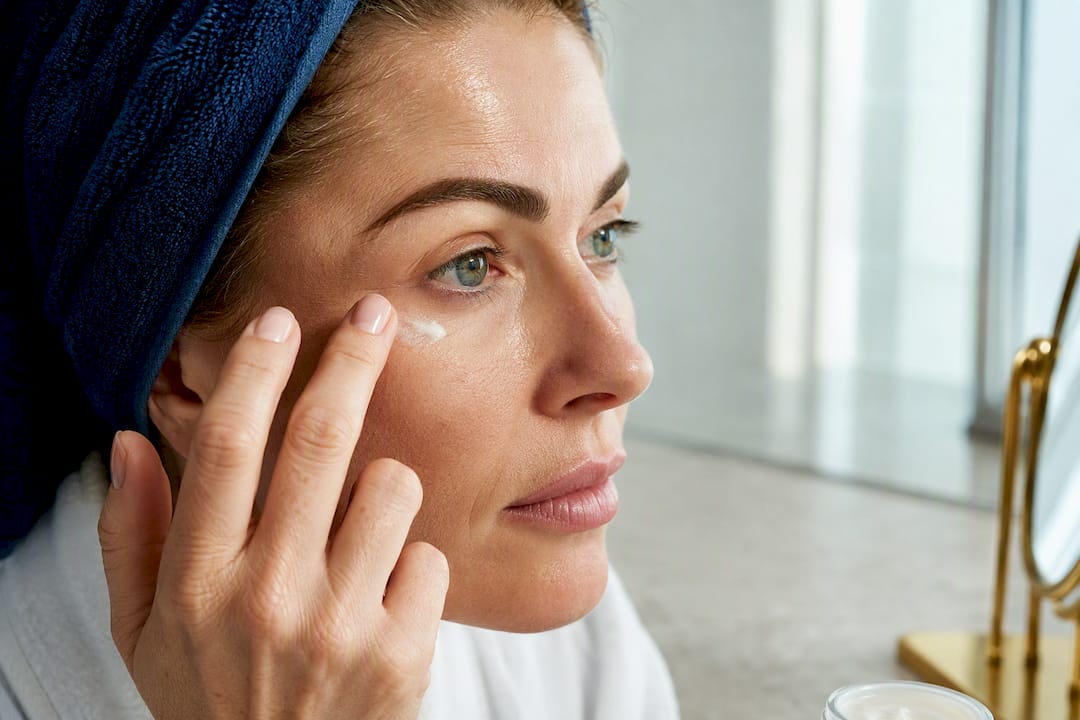
Timing matters too. Apply caffeine-based creams in the morning, when their vasoconstrictor effect is most useful against overnight fluid pooling. Save retinol-containing products for night use, since retinoids can increase sun sensitivity. Introducing a new active every other night for the first fortnight, as covered earlier, remains the safest way to avoid the stinging or flaking that sends people back to square one.
Layering order also affects results. Apply the thinnest, most active product first, let it absorb for a minute, then follow with a heavier moisturiser or an instant-lift formula on top if you’re using one before makeup. Applying products in the wrong order can dilute the active ingredient or trap it against the skin, increasing irritation risk without improving the payoff.
Is it puffiness, bags, or dark circles?
These three terms get used interchangeably, but they describe different problems with different fixes, and mixing them up wastes time and money on the wrong remedy.
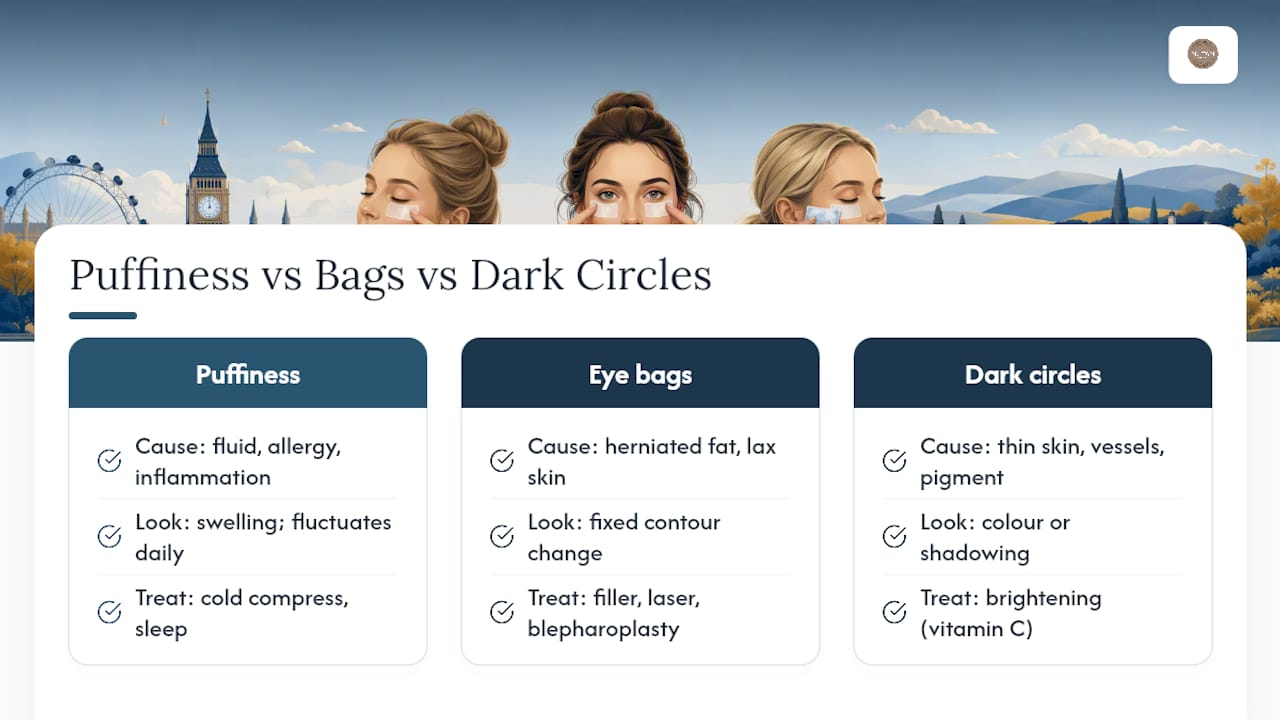
Puffiness refers to swelling, an acute, often fluctuating change caused by fluid, allergy, or inflammation. It looks different from day to day and responds to cold compresses and sleep within hours.
Eye bags describe a more fixed, often permanent change in contour, usually from herniated fat pads or lost skin elasticity as skin ages. Bags don’t disappear with a good night’s sleep the way puffiness does, and they’re the category that most often needs filler, laser treatment, or blepharoplasty.
Dark circles are about colour, not volume. They come from thin skin revealing underlying blood vessels, pigment changes, or shadowing cast by hollows or bags. A clinical evidence review on dark circles makes the point clearly: brightening ingredients like vitamin C help pigment, but they do nothing for volume or swelling, and no cream corrects genuine hollowing.
The practical test: press gently on the area. If it’s soft and shifts with position, it’s fluid or fat. If pressing reveals darker skin without swelling, it’s pigment. Treating the wrong category is the single most common reason people feel their eye cream “doesn’t work.”
How much of a role do allergies play?
Allergies are a bigger contributor to under-eye puffiness than most people assume, and they’re often missed because the swelling gets blamed on tiredness instead. Airborne allergens, pet dander, and seasonal pollen all trigger histamine release in the thin skin around the eyes, causing localised swelling that can look identical to fluid-related puffiness.
Diagnosing an allergic cause is usually straightforward through pattern recognition. Puffiness that flares at the same time each year, worsens after specific environments (a friend’s house with pets, a particular season), or comes with itching and redness rather than just swelling points to allergy rather than fatigue or diet.
Managing it involves a layered approach. Oral antihistamines address systemic allergic response, while antihistamine eye drops target localised inflammation directly at the source. Saline rinses help clear allergens from the nasal passages, which indirectly reduces the overall inflammatory load. For cosmetics-triggered reactions, specifically contact dermatitis from a new mascara, cream, or makeup remover, the fix is elimination rather than medication: stop the product, let the skin settle for a week, then reintroduce suspects one at a time. Anyone with allergic puffiness that’s frequent or severe enough to affect daily life is better served by a GP or allergist assessment than by trial and error with over-the-counter drops.
What’s the best long-term prevention strategy?
Preventing puffiness works better than treating it, and the strategy that holds up combines three layers rather than relying on any single fix.
Lifestyle forms the foundation: consistent sleep of 7 to 9 hours, moderate salt intake, particularly in the evening, and limiting alcohol close to bedtime all reduce the overnight fluid pooling that causes most morning puffiness. These aren’t occasional interventions, they’re habits that need to hold most nights to keep swelling from becoming routine.
Skincare adds a second layer. A caffeine-based cream used consistently each morning, paired with gentle application technique, keeps mild fluid-related puffiness in check without irritating fragile periorbital skin. Dermatologist commentary on periorbital treatments is consistent on this point: no single cream fixes every cause, so consistency in a simple routine beats switching products frequently.
The third layer is knowing when lifestyle and skincare have hit their ceiling. If bags remain unchanged after weeks of genuinely consistent effort, that’s the signal the cause is structural rather than fluid-based, and it’s time to discuss fillers, resurfacing, or blepharoplasty with a clinician rather than adding another product to the routine. Understanding periorbital oedema as a distinct condition can help clarify which category your puffiness actually falls into before you invest further in either creams or procedures.
NuTan’s evidence and product perspective
Most advice on puffy eyes treats every case the same way, which is precisely the gap this guide has tried to close. NuTan® works across skincare and instant-effect cosmetic products, and that vantage point makes one thing obvious: consistency in daily habits does more for chronic puffiness than any single product claim, however good that product is.
Where NuTan® can genuinely help is the instant category. The NuRejuv Instant Lift Eye Cream is built for the moments when you need a visible change in minutes rather than weeks, applied with the same gentle technique covered above to protect delicate periorbital skin. It won’t correct herniated fat pads. Nothing topical will. But for temporary tightening ahead of an event, it does exactly what it says on the tin.
— NuTan
Try NuRejuv for a visible lift in minutes
Cold compresses and better sleep take days to show their full effect. If you need to look less tired in the next three minutes, no lifestyle change can do that, but a targeted instant-lift product can. That’s the specific gap NuRejuv Instant Lift Eye Cream fills within the NuTan® range: a temporary, visible tightening effect for mornings when structural fixes and long-term habits simply haven’t kicked in yet.

It suits anyone who wants a quick cosmetic result before a meeting, a photo, or an event, used alongside, not instead of, the sleep and allergy management covered earlier in this guide. Some beauty brands offer worldwide shipping, so wherever customers are, the same product and application guidance apply. Browse the NuRejuv Instant Lift Eye Cream product page to check current stock and place an order today.
This article is general information, not a substitute for advice from a qualified doctor. Consult a qualified healthcare professional about your own circumstances before acting on anything here.
Sources
FAQ
How do I get rid of puffy under eyes fast?
Apply a cold compress for 5 to 10 minutes, keep your head elevated while sleeping, and treat any allergic trigger with an antihistamine; most fluid-related puffiness improves within 20 minutes to a day.
How do you drain lymphatic fluid from under the eyes?
Gentle tapping with the ring finger from the inner corner outward, following the orbital bone, encourages fluid movement, though a cold compress and elevated sleeping position generally have more consistent evidence behind them.
What causes very puffy under eyes?
The main causes are overnight fluid retention, allergic inflammation, contact dermatitis from cosmetics, and age-related changes like herniated fat pads or lost skin elasticity, each requiring a different remedy.
What is the best eye puffiness reducer?
For fluid-related puffiness, a caffeine-based cream applied consistently each morning has the strongest evidence behind it; for an instant, temporary visible lift before an event, a product like NuRejuv Instant Lift Eye Cream is designed specifically for that purpose.
Recommended
Comments